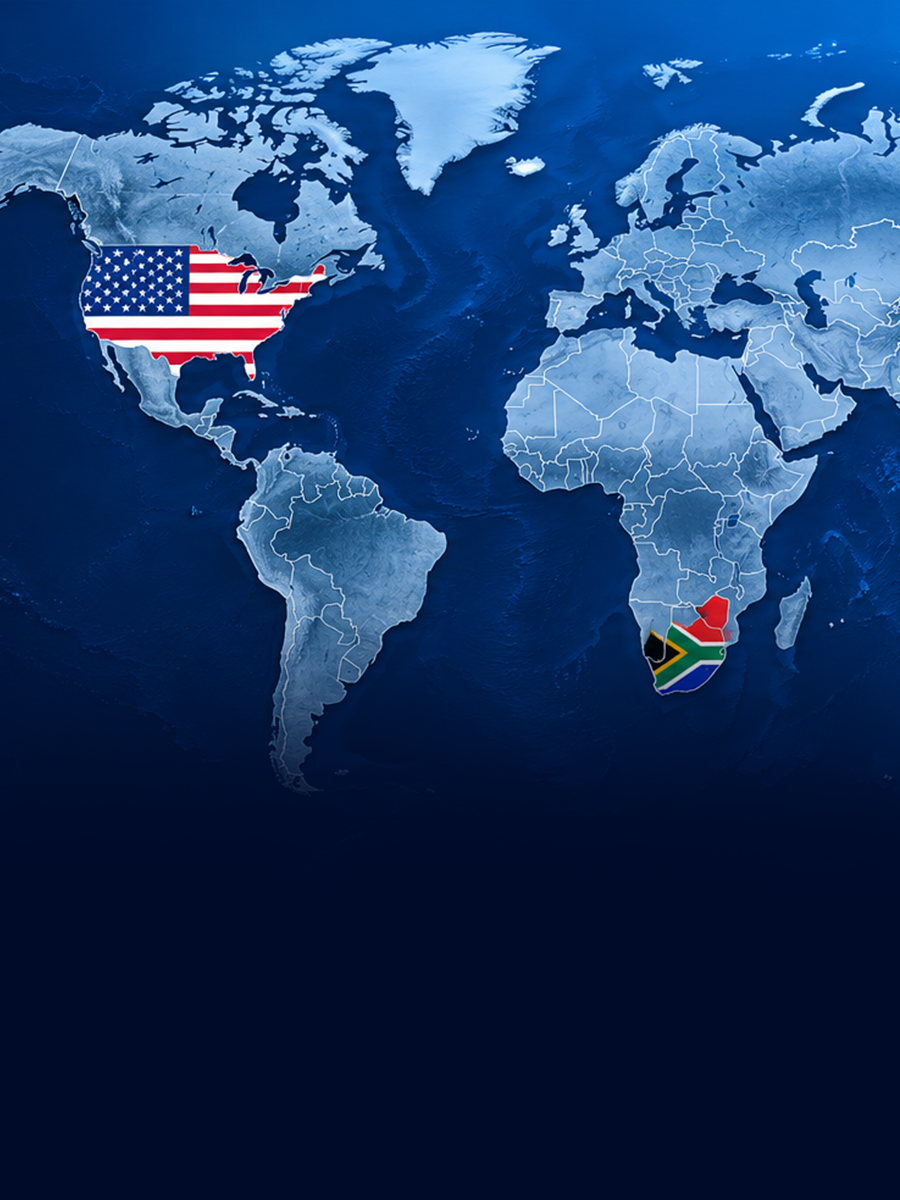


The forces shaping the next eighteen months are already in motion. Reading them clearly is the difference between leading the cycle and being caught by it.
It Has Been a Year
Anyone running a freight forwarding operation in the US right now does not need to be told the environment is complex. They have lived it. Tariff policy shifting faster than contracts can be repriced. Import surges driven by expiration deadlines, followed by demand cliffs when the window closes. Ocean carriers adding capacity into a market that already has too much of it. A domestic trucking sector that somehow manages to be both depressed and on the verge of a capacity squeeze. Regulatory changes arriving without the grace period the industry used to count on.
It has been, by most accounts, one of the most demanding operating years in memory.
And yet, the next twelve to eighteen months may matter even more. Not because they will be harder. Because the forces reshaping the market are reaching a point where the freight forwarders who have prepared will separate decisively from those who have not. The window between those two outcomes is narrowing, and what follows is a look at why.
The Trade Environment Has Entered a New Phase
There was a time when tariff changes happened on a legislative cycle. Months of debate, published timelines, implementation windows wide enough to plan around. That cadence is gone.
Container imports into the US rose over eight percent year-on-year in recent months, driven almost entirely by shippers racing to move cargo ahead of tariff deadline expirations. That front-loading creates a false demand signal that the entire logistics chain has to absorb and then unwind when the volume drops off. Warehouse space gets booked for inventory that was pulled forward. Trucking capacity gets consumed for loads that would have moved later. And when the deadline passes, the demand cliff hits every participant at once.
USMCA is approaching its joint review period, which introduces uncertainty into the North American trade framework that most cross-border supply chains were architected around. Section 301 adjustments remain possible. And the broader tariff posture continues to reshape sourcing decisions in ways that will take years to fully play out, with manufacturing shifting closer to home in some sectors and new compliance layers appearing across nearly all of them.
What this means for freight forwarders is that the commercial model needs to absorb volatility as a baseline condition, not as an exception. Rate validity windows need to compress. Surcharge mechanisms need to be built into contracts rather than negotiated reactively. Landed cost modelling, including tariff scenario analysis, needs to be part of the quoting process rather than an afterthought that surfaces when the client gets an unexpected duty bill. And communication speed matters more than it ever has, because the forwarder who explains tariff impact and offers options within a day holds the relationship, and the one who takes a week to respond finds the client already talking to someone else.
A Tale of Two Capacity Markets
The capacity picture heading into next year is almost paradoxical, and understanding the interaction between the two halves is where the real planning intelligence lives.
Ocean shipping is awash in capacity. Fleet growth hit 3.7 percent this year. Next year, projections suggest eight percent growth. If the Suez Canal reopens as a structural transit route, transit times on key East-West lanes shorten and even more vessel capacity enters the market. For freight forwarders, this is a window: favourable ocean procurement conditions, room to renegotiate carrier contracts, and an opportunity to lock in terms that may not be available once the cycle turns.
Domestic trucking is heading in exactly the opposite direction. Regulatory enforcement on CDL qualifications could remove ten to fifteen percent of available driver capacity. The prolonged freight recession has thinned the carrier base to the point where industry observers are openly questioning how much longer the weakest operators can survive. Equipment costs are climbing. And when the demand cycle does turn, as GDP projections suggest it will, the capacity to serve it may not be there in the volumes the market assumes.
The interaction between these two dynamics is where most planning falls short. A surge in ocean imports does not end at the port. It creates downstream trucking and warehousing demand in specific inland markets, and if that domestic capacity has tightened while ocean volumes are flowing freely, the cost and service impact at the inland leg can exceed the savings captured on the ocean rate. Planning ocean and domestic as separate exercises misses this entirely. The freight forwarders modelling the full landed chain, ocean through inland delivery, are the ones pricing accurately and avoiding the margin compression that catches everyone else by surprise.
Customs Has Become Strategic
For most of the industry's history, customs brokerage was a processing function. Classify the goods, file the entry, clear the shipment, move on. The expertise mattered, but it lived quietly in the background of client relationships that were anchored around forwarding volume and rate.
That dynamic has inverted. In the current tariff environment, a classification decision on a high-volume SKU can swing landed cost by double-digit percentages. A free trade agreement that goes unutilised because the documentation discipline was not in place represents real money left on the table, not occasionally, but on every qualifying shipment. And the penalty exposure for compliance failures has increased to the point where a single significant error can wipe out the margin on an entire client relationship.
The freight forwarders who recognised this shift early are finding that customs expertise has become one of the most resilient and commercially valuable parts of their business. While forwarding margins compress under rate pressure and overcapacity, customs advisory, duty optimisation, and compliance management are services that command premium pricing because the financial stakes for the client are too high to treat casually. The forwarder who can save an importer three percent on duty through better classification and FTA utilisation has delivered a value that no rate discount on the forwarding side can match.
This is not a peripheral capability any longer. It is a strategic anchor for client relationships. And the freight forwarders building deep, technology-enabled customs practices are positioning themselves for a market where compliance complexity only increases from here.
The Consolidation Question
The US freight forwarding and customs brokerage market has grown at a compound rate of 4.7 percent annually over the past five years. That growth masks an increasingly uneven distribution. Larger operators with technology scale, diversified service offerings, and compliance depth have been gaining share steadily. Smaller operators, particularly those dependent on single-mode forwarding revenue and manual processes, have been squeezed between margin pressure from above and rising client expectations from below.
Private equity capital is already positioning for what it sees as an inevitable consolidation wave. The thesis is straightforward: a market with compressed margins, rising technology requirements, and increasing regulatory complexity is a market where scale advantages compound and subscale operators either consolidate or fade.
For mid-market freight forwarders, this creates a decision point that grows more consequential with each passing quarter. The investment required to remain independently competitive, in technology, integration, customs capability, and client-facing visibility, is not decreasing. The revenue base to fund that investment is under pressure. And the gap between what clients now expect and what an underfunded operation can deliver is widening.
None of this means that independent freight forwarders cannot thrive. Many will. But thriving requires a clear-eyed assessment of the capability gap and a willingness to invest in closing it while the operation still has the financial and competitive position to do so. The freight forwarders who make that investment from a position of strength will define the next phase of the market. The ones who defer it will find the options narrowing.
The Demand Cycle Is Turning
Underneath all the complexity, the fundamental demand picture for US freight forwarding is turning constructive. GDP growth is projected at roughly 2.5 percent through the balance of this year, with next year expected to be even more favourable. Data centre construction is generating significant industrial freight demand. Reshoring incentives are pulling manufacturing capacity closer to home. The consumer remains resilient.
Freight rates, particularly in trucking, are expected to firm as capacity tightens and the market rebalances. For freight forwarders, this means pricing power returns for those who can demonstrate service quality, operational consistency, and compliance depth. The value conversation shifts from "lowest cost" back toward "most reliable," which is precisely the conversation that technology-enabled, operationally excellent forwarders are best positioned to win.
The freight forwarders who spent the difficult years investing in capability, building integration architecture, deepening customs expertise, improving client visibility, strengthening operational consistency, will enter the next cycle with leverage. The ones who spent the difficult years cutting costs, deferring investment, and hoping the market would return to normal will find that the market did return, but the standard for participating in it profitably has moved.
The Pattern
Every market cycle in freight forwarding follows a recognisable rhythm. A difficult period compresses margins and forces hard decisions. A recovery period rewards the operators who made the right ones. The distance between those two groups, between the prepared and the passive, is determined almost entirely by what happens during the difficult period. Not during the recovery.
The US freight forwarding market is approaching the turn. The forces driving it are visible. The capabilities required to capture it are known. And the window to build those capabilities, if they are not already in place, is measured in quarters, not years.
The freight forwarders who read the moment clearly and act on it will look back on this period as the one that defined their next decade. The ones who waited for certainty will discover, as they always do, that certainty is what the market offers after the opportunity has already been allocated.
.png)
.png)

.png)

.png)






.png)
.png)








.png)

.png)

.png)



.png)








.png)




.png)












.png)












.png)






.png)
.png)