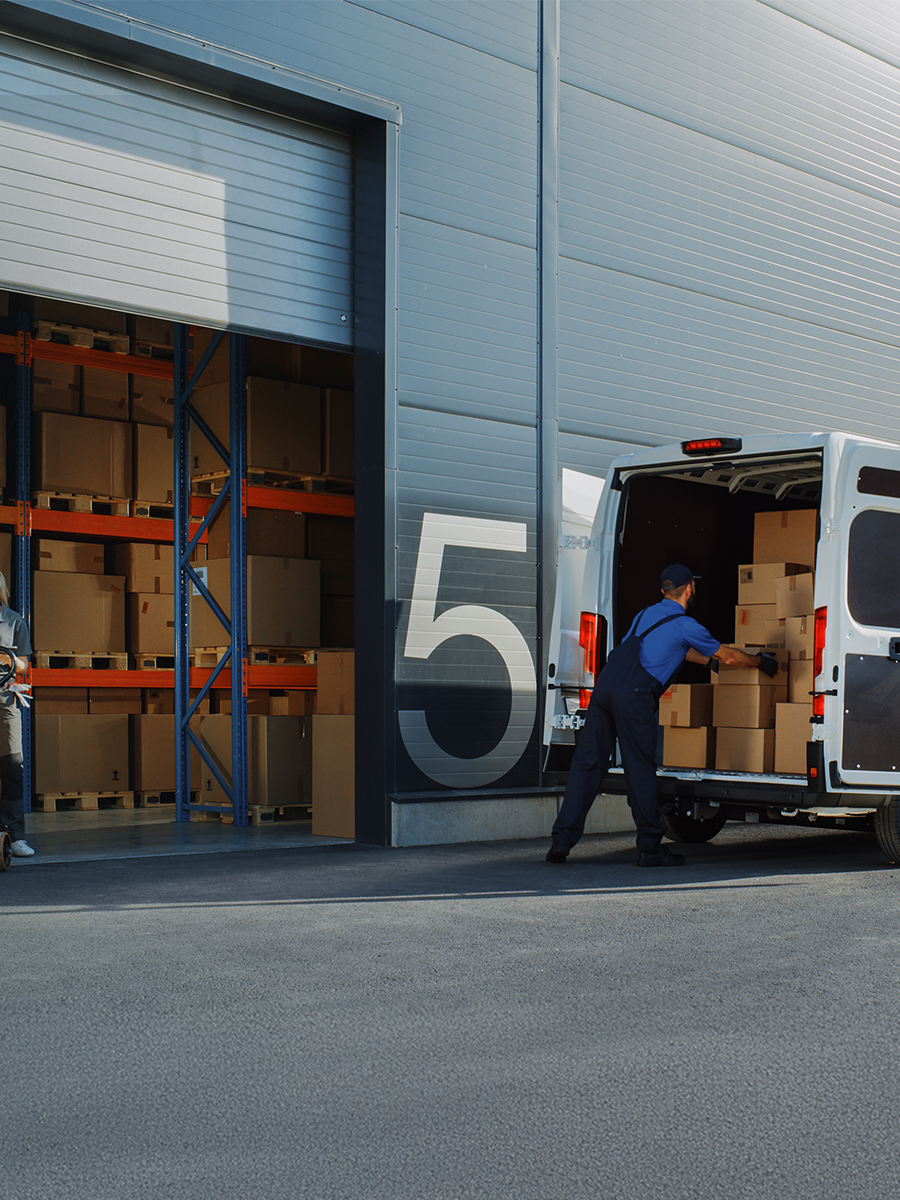


The roles are changing. The skills are changing. The career paths are changing. The only thing that has not changed is how little most organisations have done to prepare.
The Workforce Question Has Moved On
A few years ago, the future of work conversation in logistics was about location. Remote or office. Hybrid models. Flexible hours. The Great Resignation and what it meant for retention.
That conversation is over. The industry settled into its answers and moved on.
The conversation that replaced it is more consequential, less comfortable, and far more urgent. It is about the nature of logistics work itself. What tasks humans perform. What tasks machines perform. What skills matter now that routine execution is being automated at scale. And whether the industry's workforce development model, largely unchanged for decades, is fit for what comes next.
MHI ranked the workforce and talent gap as the single most impactful supply chain trend this year. Not AI. Not automation. The people question. Above everything else.
Three Shifts Happening Simultaneously
The first shift is in the work itself. AI document intelligence, automated milestone tracking, exception management systems, and agentic workflows are absorbing the routine tasks that historically consumed the majority of a logistics professional's day. Data entry. Status checking. Document processing. Carrier follow-ups. Rate entry. These activities are not disappearing overnight, but they are shrinking rapidly as a proportion of the role. What remains, and what is expanding, is the strategic, relational, and analytical work that technology cannot perform: complex routing decisions, carrier negotiations, client management during disruptions, compliance interpretation, and commercial judgement.
The second shift is in the skills the industry needs. Demand for professionals who combine deep supply chain knowledge with genuine digital fluency has surged. New roles are being created with real hiring budgets behind them: AI Forecast Coach, Predictive Logistics Operations Manager, Supply Chain Agent Manager, Automation Coordinator, Supplier Sustainability Specialist. The logistics professional of five years ago needed to understand freight flows, documentation, and regulatory requirements. The logistics professional of today needs all of that, plus the ability to work alongside AI tools, interpret their outputs, and know when to trust the recommendation and when to override it.
The third shift is in the talent pipeline. Entry-level tasks were always the apprenticeship. New hires learned the operation by doing the routine: processing files, keying data, tracking shipments, building the instinct for how freight moves through a system. As AI absorbs that routine, the traditional path into logistics expertise is narrowing. The industry is simultaneously competing for experienced professionals who already possess the hybrid skill set and reducing the entry point through which those professionals were historically developed. That tension is structural, not temporary, and it will define workforce strategy for the next decade.
The Readiness Gap
Most logistics organisations have invested in the technology. Far fewer have invested in preparing their people to work with it.
Gartner found that while the vast majority of supply chain organisations describe themselves as AI-ready, nearly half identify AI skills as their largest workforce capability gap. The technology is deployed. The workforce is not equipped to capture its full value.
This gap shows up operationally. Tools that were purchased to improve productivity sit underutilised because teams were not trained to integrate them into their workflows. Automation that should have eliminated manual work creates new manual work because the surrounding processes were not redesigned. AI outputs that should accelerate decisions get second-guessed or ignored because the people receiving them do not understand how the model reached its recommendation.
The gap also shows up in engagement. The workforce sees the transformation happening around them. Leadership communicates optimism about what AI will deliver. But the people doing the work often feel the pressure to adapt without being given the time, the training, or the clarity about what their role looks like on the other side. That disconnect erodes trust, and eroded trust drives attrition at exactly the moment when experienced operators are most valuable and most difficult to replace.
What the Future Logistics Professional Looks Like
The logistics career was traditionally linear. Coordinator to team lead to operations manager. The progression rewarded volume, accuracy, and reliability. Do the work, do it well, do more of it, and advance.
The future career path in logistics is branching. Operational expertise is still the foundation, but the pathways diverging from it are multiplying. Data analytics. Integration architecture. Automation management. Compliance technology. AI governance. Commercial strategy informed by algorithmic pricing. Each of these is becoming a distinct career track within logistics organisations, and each requires a different blend of operational knowledge and technical capability.
The professional who thrives in this environment is not a technologist who learned logistics or a logistics operator who learned to code. They are something the industry has not had to develop before at scale: a hybrid who understands the operation deeply enough to challenge an AI's recommendation, fluent enough in data to interpret what the systems are telling them, and commercially aware enough to translate both into decisions that create value for the client and the business.
Developing that professional is not a training problem. It is an organisational design problem. It requires new career frameworks, new development programmes, new incentive structures, and new ways of defining what "high performance" means in a role that is fundamentally different from what it was three years ago.
What This Demands of Leadership
The logistics leaders who will build the strongest organisations over the next five years are the ones who recognise that every technology decision is a workforce decision.
Deploying AI document capture changes the coordinator role. Implementing automated exception management changes the operations manager role. Rolling out agentic pricing tools changes the commercial team's role. None of these are purely IT decisions. Each one reshapes how people spend their time, what skills they need, and what their career trajectory looks like.
The implication is that workforce strategy needs to sit in the same room as technology strategy. Not downstream from it. Alongside it. The COO planning the next phase of automation and the head of people planning the next phase of workforce development need to be building from the same blueprint. When they are not, the result is technology that works but people who do not know how to work with it. That is the most expensive kind of underperformance: paying for a capability the organisation cannot fully use because the human side of the investment was treated as an afterthought.
Clear communication matters enormously here. People can navigate change. What they cannot navigate is ambiguity. Telling your team specifically how their roles are evolving, what the organisation is investing in to support them, and what the new expectations and opportunities look like is not a nice-to-have. It is the difference between a workforce that leans into the transition and one that quietly starts looking for stability elsewhere.
The Advantage That Cannot Be Purchased
Within the next few years, every logistics company will have access to fundamentally similar AI, automation, and platform capabilities. The technology itself will not be a differentiator. It will be infrastructure.
The differentiator will be the people who operate it.
The company whose workforce trusts the technology, understands its outputs, and applies human judgement where the algorithm ends will extract more value from the same tools than the company whose workforce was never brought along. The company that built new career paths for an AI-enabled operating model will attract the talent that the company still running legacy development programmes cannot reach. The company that paired every technology deployment with genuine investment in its people will compound the returns from both.
The future of work in logistics is not a technology story. The technology is already here. It is a leadership story. About whether the people running supply chain organisations are willing to invest as seriously in developing their teams as they invest in upgrading their systems.
The organisations that do will define the next era of logistics performance. The organisations that do not will spend the next decade trying to understand why the technology they purchased never delivered the returns they were promised.
The answer, when they find it, will always be the same. It was never the technology. It was always the people.
.png)
.png)

.png)

.png)






.png)
.png)







.png)
.png)
.png)



.png)








.png)



.png)












.png)











.png)



.png)
.png)