

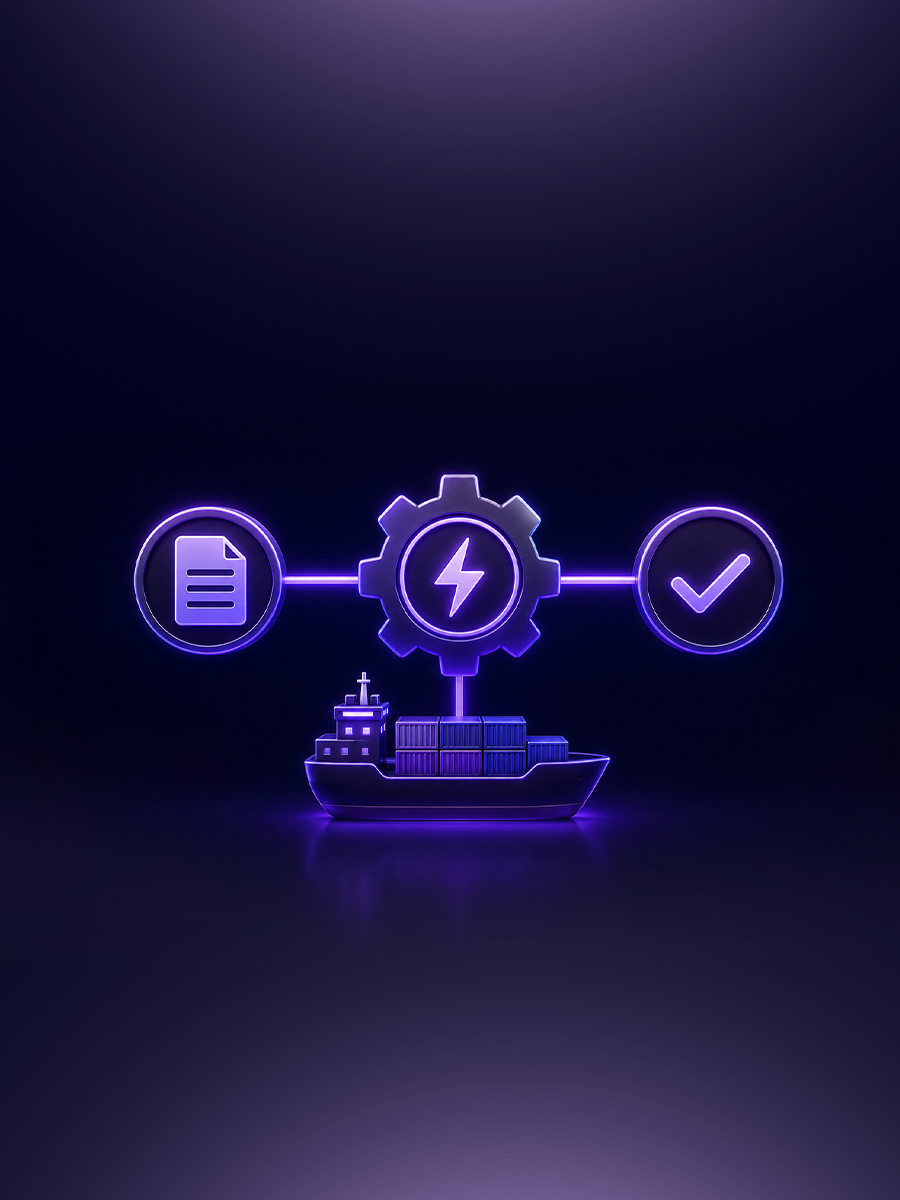
Every logistics business running CargoWise today has access to an AI capability layer that would have been unrecognisable three years ago. Document ingestion that reads a bill of lading and populates the job record. Classification intelligence that suggests HS codes from commodity descriptions and shipment history. Compliance screening that flags restricted parties and controlled goods before a declaration is submitted. Workflow automation that assigns tasks, escalates exceptions, and progresses shipments through structured logic. A customer visibility layer — CargoWise Neo — delivering real-time tracking and document access directly to clients, with zero involvement from the operations team.
WiseTech Global has been explicit about where this is heading. CargoWise is a system of execution — a platform that determines what should happen next and acts on it. The AI tools already embedded inside Value Packs are the infrastructure for that shift, and they are evolving rapidly.
And yet, across the industry, only 5.5% of organisations are seeing meaningful financial returns from AI. Seventy-four percent of logistics providers are investing. Fewer than a quarter have a strategy behind that investment. The spending is real. The returns, for most, are still aspirational.
That disconnect has a pattern to it, and understanding it is worth more than understanding any individual AI feature.
What Is Already Inside the Platform
The depth of AI capability now embedded in CargoWise is worth understanding in full, because most businesses on the platform are using a fraction of what is available to them.
- AI Workflow Engine — configurable rules that assign tasks, trigger milestones, escalate exceptions, and close completed steps across every shipment. The operational coordination that currently sits with individuals, governed by the system instead.
- AI-Assisted Document Ingestion — computer vision and natural language processing applied to arrival notices, commercial invoices, bills of lading, and packing lists. Data extracted, validated, and structured into the job record automatically, with early indicators showing 40–60% reductions in manual entry for high-volume document types.
- SARA (Smart Auto Request Agent) — an agentic AI that reads incoming emails and documents, identifies what is missing or illegible, contacts the importer or exporter directly for clarification, and delivers completed information back to the operator. The entire information-gathering loop — the one that quietly consumes hours of operational capacity every day — handled autonomously.
- Auto Job Creation — once SARA completes the information cycle, job registration triggers automatically within CargoWise, with classification and compliance checks already initiated before the operator opens the record.
- AI Classification Assistant — HS code recommendations drawn from commodity descriptions and the platform's global shipment history. In an industry where roughly 30% of manual customs entries contain errors, this shifts classification from a research task to a review-and-confirm exercise.
- ComplianceWise — restricted party screening, controlled goods checks, and export compliance risk assessments running inside the submission workflow. Trained on control lists, sanctioned entity databases, and contextual logic — delivering precision comparable to experienced compliance officers, with a full audit trail behind every decision.
- ACE (AI CargoWise Expert) — an AI knowledge assistant embedded in the platform, answering CargoWise process and system questions in real time. Every user, every branch, every country — instant platform guidance without waiting for internal support.
- CargoWise Neo (Expanded) — the customer-facing layer delivering live tracking, document access, booking management, and proactive exception alerts. Customer service that scales with volume, because the system delivers it.
WiseTech's stated ambition is up to 50% labour cost savings for logistics service providers through this suite. The capability is already live. The tools are already included.
So why are so few businesses capturing that value?
The Pattern Worth Recognising
Here is where it gets interesting and where most of the industry conversation goes quiet.
AI performs at the level of the data beneath it.
A document ingestion engine reading a bill of lading and populating a job record is extraordinary technology. It is also only as good as the data structure it is feeding into. If the job lifecycle underneath — milestones, task workflows, exception logic — was configured to the minimum viable level that got the business through go-live three years ago, the AI produces speed on top of a weak foundation. The operations team ends up correcting what the automation generated, which is a more expensive version of the problem they already had.
The same dynamic plays out across every capability. Classification intelligence draws on historical shipment data and if that data has been entered inconsistently across branches, countries, and operators for years, the AI learns inconsistency. ComplianceWise screens against control lists inside the submission workflow — and if the workflow was never structured to trigger compliance checks at the right point in the process, the flags arrive after the consequence, which is worse than no flag at all.
This is the pattern running beneath the industry's AI returns gap: the technology is sophisticated, mature, and embedded directly in the operating platform. The environments receiving it, overwhelmingly, were never built to support what it requires.
And it makes sense when you trace how most CargoWise environments were originally built. The priority at go-live was operational continuity; get the team working, get freight moving, get billing out the door. Configuration decisions were made for speed, with the understanding that optimisation would come later. For many businesses, later never arrived. Workflows stayed at their initial depth. Master data accumulated without governance. Integrations were built one at a time by different teams and different vendors, with documentation that ranged from sparse to non-existent.
Those environments functioned. They moved freight, processed customs entries, and generated invoices. They were never designed to serve as the data and process foundation for an AI execution layer — because when they were built, that layer did not exist.
Now it does. And the distance between what the platform offers and what the environment can absorb is where the entire AI conversation should be focused.
What Readiness Looks Like in Practice
Preparing a CargoWise environment for AI is fundamentally an exercise in operational depth — getting the foundation right so the intelligence layer above it has something solid to work with.
Data integrity comes first. Master data — customers, suppliers, carriers, commodities, charge codes — needs to be clean, consistent, and governed across the entire environment. AI tools querying master data that has been maintained differently in Sydney than in Rotterdam than in Houston will produce outputs that reflect that fragmentation. This is the least glamorous part of the work and the one that determines everything above it.
Workflow architecture has to match the logic AI is built to operate on. The AI Workflow Engine automates structured, sequential processes. If milestones fire inconsistently, if tasks are still being assigned through email and spreadsheet, if exception handling is a judgment call made differently by every operator on the floor — automation applied to that environment codifies the inconsistency rather than resolving it. The process design has to come before the automation, full stop.
Configuration depth across every module matters. Document ingestion, classification, and compliance tools operate across forwarding, customs, finance, and warehouse. Each module needs to be configured to the depth that gives AI structured, reliable data to interact with, and in most environments, there are modules running well below that threshold because they were configured for a different era of the platform's capability.
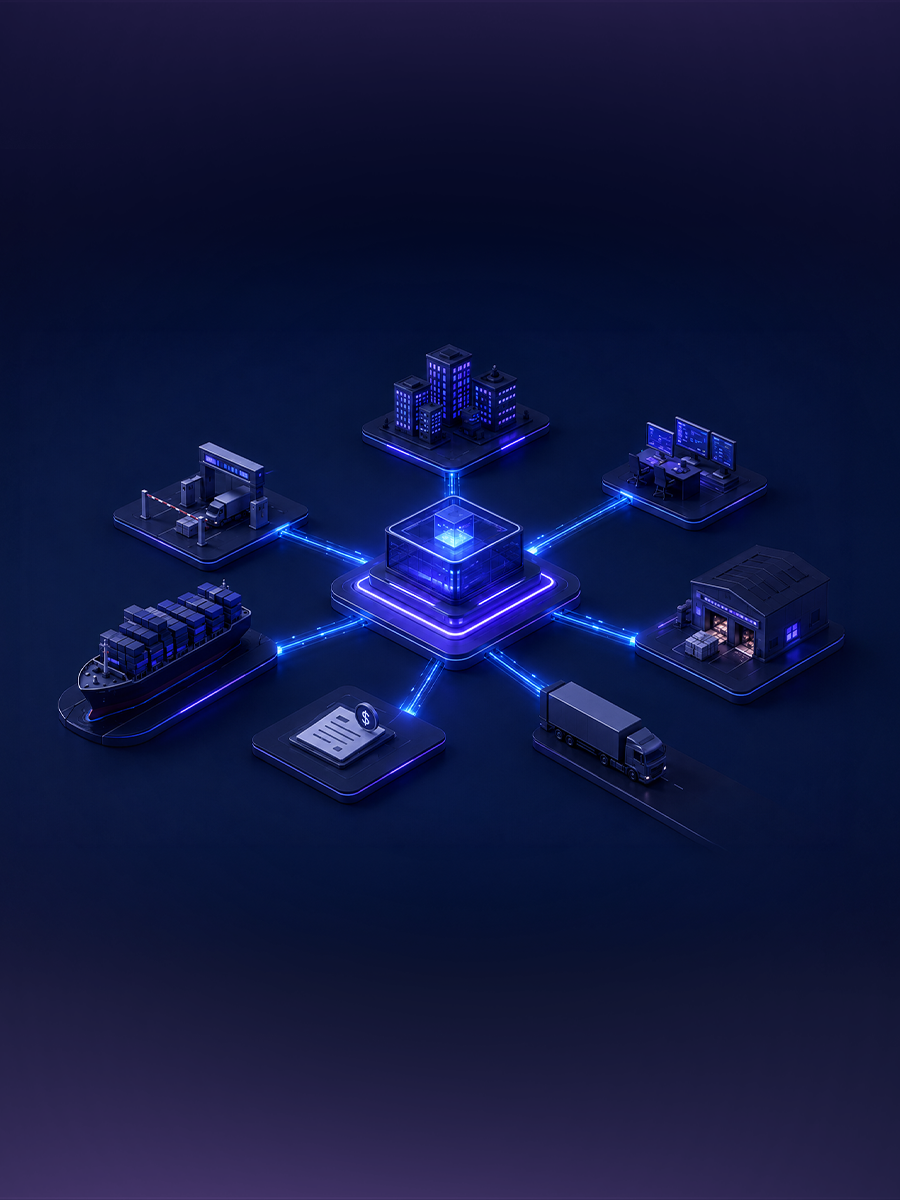
Integration architecture feeds the AI layer. SARA, Auto Job Creation, and the document ingestion pipeline all depend on data flowing into CargoWise from carrier systems, customer communications, and government platforms. Where those integration points are fragmented, manually bridged, or built on legacy architecture, the AI capabilities downstream are working with incomplete inputs. Integration readiness and AI readiness are the same conversation.
Team adoption closes the loop. Every AI tool inside CargoWise operates on system data. When the team works outside the system — parallel spreadsheets, offline tracking, manual workarounds that bypass the platform — the AI has blind spots. Closing those gaps is as much a change management exercise as a technical one, and it requires training designed around how each role's daily work actually changes, not a feature demonstration.
Where SFL Tech Sits in This
SFL Tech has been inside CargoWise environments long enough — 800+ projects, 250+ clients, 60+ certified professionals across 50+ countries — to understand precisely where the readiness gaps sit and how they form. The approach is consistent: assess the current environment across its operational foundation, its automation layer, and its AI capability. Map where the distance between what Value Packs make available and what the environment is actually extracting value from is widest. Close those gaps in a sequence governed by commercial return — highest-impact first, with KPI baselines set before the work begins and measured against real operational data after.
The AI is already inside the platform. Activating it is straightforward. Making it perform inside a live, complex, multi-entity freight operation with years of configuration history beneath it, requires the kind of environment depth that only comes from doing the foundational work properly.
That foundational work is where the value is. It always has been.







.png)
.png)
.png)