

How SFL helped a global freight forwarder move its largest operating market onto CargoWise while protecting data integrity, local compliance and workforce readiness.
Moving one office from a legacy system to CargoWise is a technology project. Moving 25 offices, after 15 years on the same system, is an operating-model transformation.
That was the challenge facing a global freight forwarding and logistics company from the Indian Subcontinent as it progressed with a wider CargoWise rollout across its international network.
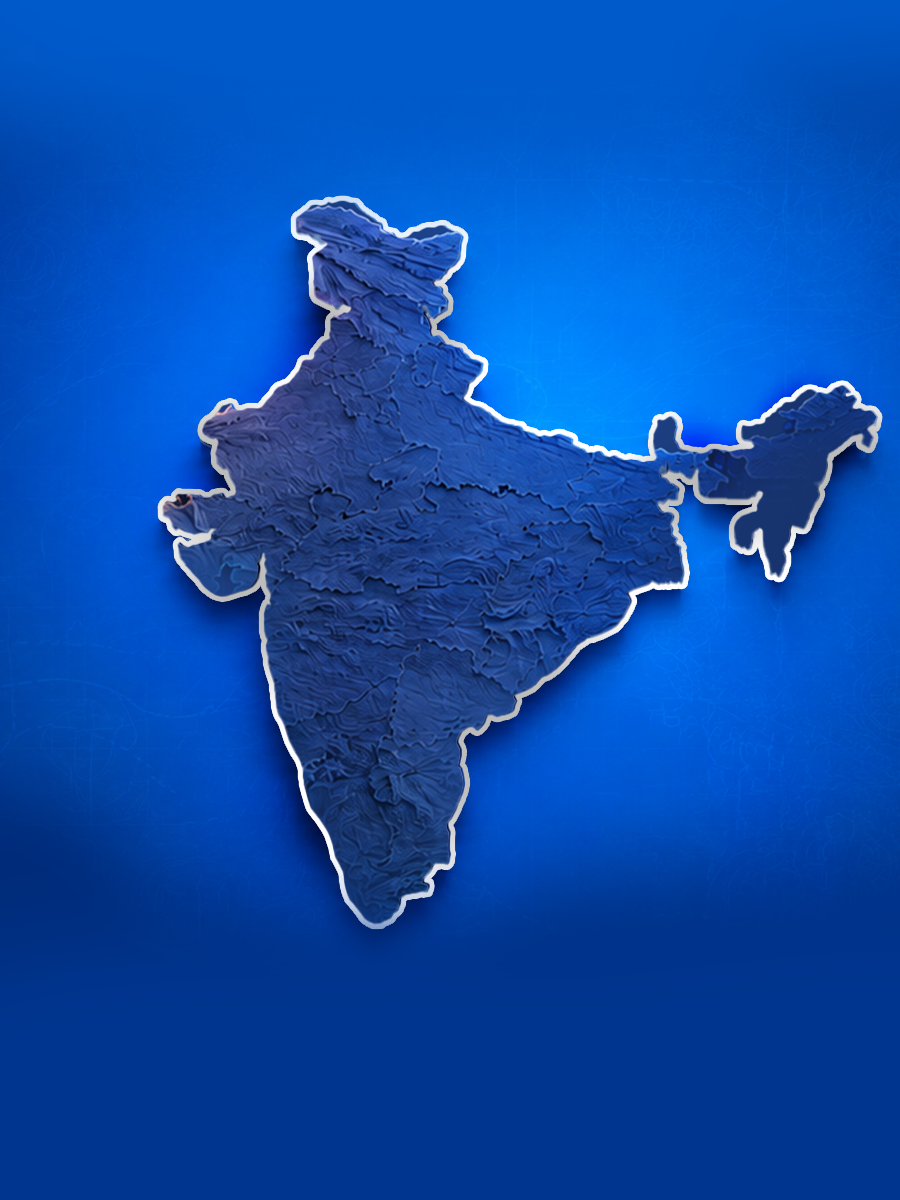
The company operated across 18 countries, with more than 2,300 employees in 60 offices. India was its largest country of operation, with up to 25 offices forming the most significant component of the global programme.
The business had already committed to CargoWise. The harder question was whether its largest market could make the transition without compromising the processes, data and local compliance requirements on which the operation depended.
India could not be treated as another standard country rollout.
Employees had worked on the existing system for 15 years. Master data accumulated across that period needed to move into the new environment accurately. Finance needed to accommodate the complexity of Indian GST and TDS requirements. Staff across a geographically distributed network needed to understand how to perform their roles inside CargoWise before the cutover took place.
The implementation therefore had to solve more than configuration. It had to bring 25 offices into a common operating environment while freight continued to move.
The Client
The client is a global freight forwarding and logistics company headquartered in the Indian Subcontinent, with operations across 18 countries, 60 offices and a workforce of more than 2,300 people.
As part of a wider technology transformation, the organisation was standardising its international operations on CargoWise. India was the largest and most operationally complex part of that programme.
Its scale made the region strategically important, but it also raised the risk of implementation inconsistency. A poorly controlled transition in India would not remain an isolated local issue. Problems with master data, process adoption or financial configuration could affect reporting, governance and the wider global operating model.
For the client, getting India right was central to getting the global rollout right.
The Challenge: A Global System Had to Work in a Very Local Reality
Fifteen years on one operating system leaves a deep footprint.
Processes become embedded. Teams build habits around the technology they know. Branches develop their own ways of completing tasks. Reporting routines evolve around existing data structures. Over time, those behaviours become part of how the operation runs.
Replacing the technology without addressing those behaviours would simply have moved old ways of working into a new system.
That made three areas particularly important.
- First was master data integrity. With 25 offices moving onto CargoWise, inconsistent records or poorly controlled data entry could quickly flow into finance, reporting, automation and future integrations.
- Second was workforce adoption. Employees needed to understand the relevant CargoWise functionality before go-live, not learn through trial and error once live freight began moving through the system.
- Third was local finance compliance. Indian GST and TDS requirements had to be configured correctly within the CargoWise Finance environment while remaining aligned with the client’s broader global model.
The business therefore needed a partner that understood both CargoWise and the operating conditions surrounding its deployment in India.
Why SFL
The India rollout required more than technical configuration capability.
The client needed a partner with strong CargoWise implementation experience, but also regional understanding, knowledge of Indian taxation and enough delivery depth to support a large number of offices through the transition.
SFL brought that combination.
At the time of the engagement, the team drew on experience from more than 70 CargoWise implementations, together with regional domain knowledge and practical understanding of geo-compliance requirements in India.
That allowed SFL to approach the programme as a business transition rather than a software installation. The implementation covered CRM, Freight Forwarding and Finance, but the work extended into process blueprinting, automation, data preparation, training, local compliance and pre- and post-go-live support.
The objective was clear: establish an India operation that could function confidently within the client’s global CargoWise model from day one.
The SFL Solution: Build the Operating Model Before Go-Live
SFL began by defining how the future-state operation needed to work inside CargoWise. Rather than simply reproducing the legacy environment, the team used blueprinting to establish how processes should operate across CRM, Freight Forwarding and Finance. Automated business processes were introduced where appropriate, while remote configuration enabled significant parts of the environment to be prepared before the physical rollout began.
This mattered because the implementation had to create consistency across 25 locations without ignoring the operational realities of individual branches. The technology had to be configured around a clear operating model before employees were asked to use it.
Protecting the Data Before It Entered the New Environment
Master data was treated as a core implementation workstream.
Years of legacy information could not simply be moved into CargoWise and corrected later. In an operation of this size, poor-quality master data would quickly affect multiple functions and branches.
SFL supported data sanitisation, audit reporting and clear guidelines for master-data entry, helping the client establish stronger controls before and during migration.
The objective was not only to clean the data being transferred. It was to create a more disciplined approach to how data would be managed once the new environment was live.
That became particularly important as the client moved towards a more standardised global CargoWise operation, where branch-level inconsistencies could increasingly affect wider reporting and governance.
Configuring India Without Breaking the Global Model
The Finance workstream required equally careful treatment.
Indian GST and TDS requirements introduced local complexity that could not be handled as an afterthought. The configuration had to support those requirements correctly while still fitting within the wider structure of the client’s global CargoWise rollout.
SFL’s regional experience and knowledge of Indian taxation played a central role here.
Local finance requirements were built into the CargoWise environment rather than managed outside it, resulting in 100% GST and TDS compliance across the implemented scope.
This became one of the strongest client validations of the engagement.
“We were worried how we would implement CargoWise across all our branches given the distance between our offices and the diversity of our staff. Their knowledge on local taxation — in particular GST — has helped us configure our system to be 100% GST compliant. SFL has made this mammoth implementation an easy one for us and they continue to provide us with timely support.”
Chief Administration Officer
Preparing 25 Offices for the Same Cutover
The final challenge was adoption.
Training was therefore built into the implementation rather than treated as a separate activity near go-live. SFL conducted pre-go-live training across the relevant CargoWise modules so employees understood how their roles and processes would operate in the new environment before the transition took place.
But training alone was not considered enough.
At go-live, SFL positioned key personnel across regional offices so support was available where the transition was actually happening. Teams could resolve issues in context, clarify processes quickly and avoid reverting to familiar legacy practices when pressure increased.
Pre- and post-go-live support then continued while the operation stabilised.
That close involvement helped bridge the gap between technical implementation and operational adoption—one of the most important differences between getting a system live and getting a business successfully onto it.
The Results
Within 90 days, the client’s India operation had moved onto CargoWise. The implementation delivered measurable gains across cost, productivity, connectivity, adoption and compliance.
- 25 offices live in 90 days - India, the largest component of the client’s global rollout, transitioned onto the new CargoWise environment within the programme window.
- 450 licences reduced to 350 - The required CargoWise licence footprint was rationalised by 100 licences, reducing the original requirement by approximately 22%.
- 166 reporting hours saved every month - Automation removed 166 hours of manual reporting effort each month—equivalent to almost 2,000 hours annually if sustained at the same rate.
- 45 carrier EDI connections - Carrier messaging expanded the value of the environment beyond internal system configuration and supported greater automation between the client and its carrier network.
- 100% of staff trained - Employees across the implemented operation were trained on the relevant CargoWise modules ahead of the transition.
- 100% GST and TDS compliance - The CargoWise Finance configuration supported the client’s Indian taxation requirements while remaining part of the wider global operating model.
These outcomes mattered because they demonstrated more than implementation speed. The client moved its largest operating region onto CargoWise while simultaneously reducing its licence requirement, removing substantial manual reporting effort, strengthening connectivity and preparing its workforce for the new environment.
From the Largest Rollout Risk to a Stronger Global Foundation
India could easily have become the exception inside the client’s global CargoWise programme.
It had the largest concentration of offices, the longest-established legacy environment and some of the programme’s most demanding local compliance requirements. A technically successful deployment would not have been enough if employees continued working around the system, master data became inconsistent or country-specific finance requirements sat outside the global model.
The value of the engagement was that the client was able to bring its largest operation into CargoWise with the processes, data controls, workforce readiness and local configuration needed to support the wider transformation.
That is where complex CargoWise implementations are ultimately won or lost. The platform can provide a common operating environment, but the quality of the rollout determines whether the organisation actually begins operating more consistently inside it.
For global freight forwarders, that means recognising that the hardest country in a rollout cannot simply be forced through a standard template. Local complexity has to be understood and designed into the programme without allowing it to weaken the global model.
Planning a Complex CargoWise Rollout?
Multi-office and multi-country CargoWise implementations require control across more than system configuration. Process design, master data, localisation, training, integrations and go-live support all need to work as one programme if the business is expected to operate consistently after launch.
SFL Tech supports freight forwarders across the full CargoWise lifecycle, from implementation and optimisation through integration, automation, master-data management and ongoing operational support. With 250+ clients, 800+ global projects, 60+ CargoWise Certified Professionals and seven Platinum competencies, SFL combines CargoWise depth with the regional and operational expertise required for complex global environments.
If you are preparing a CargoWise rollout across multiple offices, countries or operating models, talk to SFL about designing the programme around the operation that needs to run on it.
Talk to SFL Tech about your CargoWise implementation.





.png)


.png)
.png)