

Digital transformation has become easier to start and harder to get right.
Logistics businesses now have access to more capable platforms, stronger integrations, richer data, automation and increasingly AI. Adoption itself is no longer unusual. McKinsey’s 2026 logistics research found that nearly 90% of surveyed shippers had already deployed at least one transportation AI use case, while 96% had implemented at least one AI or digital warehouse use case. The more important finding was what separated the returns: value increasingly depended on how well those capabilities were embedded into workflows and converted into operating decisions. (McKinsey & Company)
That changes the leadership challenge considerably.
A business can replace its ERP, move infrastructure to the cloud, introduce APIs and automate parts of the operation without fundamentally changing how work moves through the organisation. Regional differences remain. Teams continue compensating for weak handovers. Data is available but difficult to trust. New technology is added around old processes, and what was meant to simplify the operation gradually becomes another layer of complexity.
WiseTech identified this problem early. Its original framework for logistics leaders focused on five questions: whether the business operates through a common system, how well it connects with customers and external parties, whether data is available across the operation, whether global compliance can be managed effectively, and whether the technology environment can scale. (WiseTech Global) The original SFL article carried those same questions into a practical transformation discussion.
The questions still hold. What has changed is the level at which leadership needs to answer them.
Start With the Business You Want to Run
The most important decisions in a digital transformation are made before anyone begins configuring technology.
Every established logistics business carries years of operating history. Processes have evolved around important customers, local regulations, acquisitions, employee experience and the limitations of previous systems. Some of that variation is necessary. Some of it has simply survived because the business became good at working around it.
A transformation programme creates an opportunity to separate the two.
If that work is skipped, the organisation can move decades of operating history into a much more capable platform and preserve most of the complexity along with it. One office continues opening jobs differently from another. Approval chains remain because nobody revisited why they were created. Customs rebuilds information already captured elsewhere. Finance waits for operational data before billing. Experienced employees continue maintaining spreadsheets because the process around the ERP never changed.
The technology has moved. The operating model has not moved far enough.
This is why WiseTech’s five questions are more useful when treated as five leadership decisions:
- What should become common? Decide which workflows, master-data standards, milestones, controls and operating rules should be consistent across the organisation, and where genuine regional or regulatory differences need to remain.
- Where should information move automatically? Identify the points where customers, carriers, authorities, partners and internal systems are still being connected by people instead of reliable integration.
- Which data should drive the next action? Determine what information the business needs to trust enough to trigger workflows, inform customers, support compliance and make operational decisions.
- Where should compliance enter the process? Build regulatory requirements into the operating flow early enough that Customs is not continually repairing weak information downstream.
- What happens when the business grows? Design process, governance, integrations, support and user capability for the volumes, markets and complexity the organisation intends to reach.
These decisions give the transformation shape. Without them, implementation teams are forced to answer operating questions through configuration, often one requirement at a time.
That is how technically successful programmes become strategically inconsistent.
Follow the Information Through the Operation
The quality of a logistics operating model becomes clearest at its handovers.
A customer sends data. Sales creates a commercial commitment. Operations builds and executes the shipment. Customs requires part of the same information. External parties return milestones and documents. Finance eventually needs an accurate operational record to recognise costs and invoice the work.
Every break in that chain creates another place where the organisation has to intervene.
Someone re-enters information because two systems do not exchange it cleanly. Someone checks a portal because an event has not entered the main workflow. Someone reconciles two versions of a transaction. A regulatory team corrects product information that should have been governed earlier. Finance holds an invoice because the operational file is incomplete.
None of these issues belongs neatly to one department. They are consequences of how information travels through the business.
That is why integration deserves a much broader definition than system connectivity. WiseTech’s original transformation framework emphasised connections with customers, partners, government systems and third parties because international logistics is inherently distributed. (WiseTech Global) The real objective is to reduce the number of times people need to reconstruct the flow when information crosses those boundaries.
This also changes how leaders should think about real-time data.
Visibility alone is becoming a low bar. A milestone appearing on a dashboard after Operations has already discovered the problem may be accurate, but it has contributed very little to the decision. The same information arriving early enough to trigger a task, escalate an exception, update a customer or change the next movement has operational value.
The maturity of a digital operation can therefore be seen in the distance between information arriving and the business acting on it.
As that distance shortens, data quality becomes more important. Master data determines whether automation can be trusted. Consistent event capture influences customer visibility. Accurate operational information affects billing. Commodity and party data feed compliance. Integration quality affects everything that consumes the information downstream.
The more technology carries the process, the less tolerance there is for weak information underneath it.
Scale Exposes the Quality of the Design
A transformation can look successful at go-live and begin struggling several years later because the original design solved for the organisation as it existed at that moment.
Growth changes the test.
A new branch introduces another operating team. A new country adds localisation and compliance. A large customer requests a bespoke integration. An acquisition brings new systems and master data. Shipment growth increases the consequences of inefficient workflows. More automation creates a greater need for exception management and governance.
These pressures reveal whether the organisation has built a platform for expansion or merely implemented technology for the current state.
This is where WiseTech’s original cloud question has evolved. Cloud infrastructure remains an important enabler, but modern scalability reaches much further into the organisation. The business needs processes that can be repeated, data that can be governed, integrations that can be monitored, controls that remain effective as volume increases, and people capable of supporting an environment that continues to change.
Several warning signs tend to appear when that foundation is missing:
- local workarounds begin growing around the central platform;
- customer integrations are built individually without common governance;
- master data becomes inconsistent between entities or regions;
- workflows accumulate exceptions until automation becomes difficult to maintain;
- key knowledge sits with a small number of super-users;
- new capability is added faster than existing processes are reviewed.
The solution is not more transformation projects. It is stronger ownership of the operating model after implementation.
Leadership has to decide who owns process changes, how local requirements are evaluated, how integrations are governed, how master data is maintained, how users continue building capability and how new technology is assessed against an actual business requirement.
Go-live therefore becomes an important milestone rather than the finish line.
The operating model has to remain governable after the project team leaves.
Leadership Has to Make the Transformation Real for the People Running It
This is also why digital transformation cannot be delegated to IT.
Technology may sit at the centre of the programme, but the decisions around it affect how Sales, Operations, Finance, Customs, Customer Service and regional teams perform their work. People are being asked to give up processes they trust, adopt common standards, rely on data created by somebody else and allow more routine decisions to move into system-driven workflows.
That change requires credibility.
The original SFL article recognised this through preparing a climate for change, blueprinting the future state, establishing a change team, communicating clearly and sustaining a culture of improvement. Those principles remain strong, but they need to happen inside the design rather than as a communication programme around it.
The people closest to the operation often understand where a proposed process will fail long before a project plan does. Their knowledge should shape the future state. At the same time, experience can also protect processes whose original reason no longer exists. Leadership has to distinguish operational intelligence from inherited habit.
Teams should come out of the transformation understanding three things clearly:
- What is becoming easier or disappearing from their workload.
- What the new operating model expects them to do differently.
- Where their judgement becomes more important because routine work is moving into the system.
That creates a much stronger basis for adoption than teaching people where to click.
McKinsey’s recent logistics research reinforces this point. Digital adoption is already high; differences in value increasingly come from the organisation’s ability to embed technology into the way decisions are made and executed. (McKinsey & Company) Earlier research also found that more than 40% of respondents said digital implementations had taken longer than expected to achieve their business objectives, despite strong satisfaction once those capabilities were established. (McKinsey & Company)
The difficult part of transformation has never been switching the technology on.
It is changing enough of the organisation around it for the investment to alter performance.
What This Means for a CargoWise Transformation
For a logistics business implementing or expanding CargoWise, this changes where the programme should begin.
The first discussion should be about the future operation: which processes need to become consistent, which data needs stronger ownership, where information should move without manual intervention, how local requirements fit into the wider model and what level of growth the environment needs to support.
CargoWise then provides the platform through which those decisions can be executed.
This is also the logic behind SFL Tech’s 5D methodology: Discover, Define, Design, Enable and Stabilise. Discovery establishes how the operation genuinely works and where complexity has accumulated. Definition sets the future-state operating model and the outcomes leadership expects from the investment. Design translates those decisions into CargoWise configuration, workflows, data and integrations. Enablement prepares the organisation to work through that model. Stabilisation keeps the programme close enough to live operations to correct what only becomes visible once real freight begins moving.
That final stage is particularly important.
Testing can validate whether a workflow functions. Live operations reveal whether it works when volumes rise, customers behave differently, exceptions collide and teams operate under normal commercial pressure. A strong implementation expects to learn from that period rather than treating every post-go-live adjustment as a defect in the project.
From there, optimisation becomes part of governance. Processes are reviewed as the organisation changes, integrations are managed as an ecosystem, user capability continues developing and new technology is introduced because it strengthens the operating model rather than because it exists.
This is where an implementation partner adds strategic value. The role extends beyond configuring CargoWise into helping the business decide how the platform should carry more of the complexity as the organisation grows.
The Real Transformation Happens in the Business
Digital transformation in logistics has moved beyond convincing organisations to adopt technology.
The opportunity now sits in how deliberately the organisation is designed around that technology.
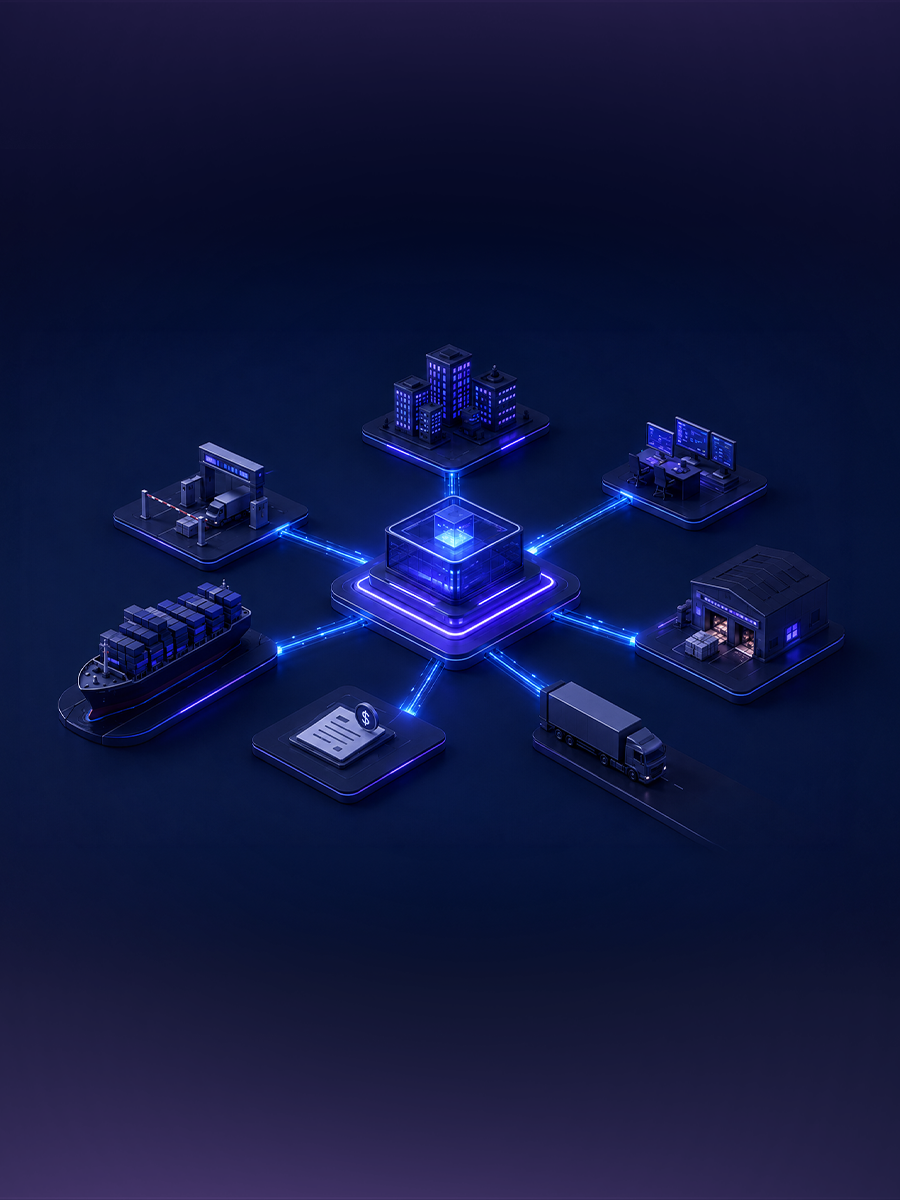
A common operating core creates consistency. Integration allows information to travel further without being reconstructed. Strong data turns visibility into action. Embedded compliance allows international growth without continually creating parallel processes. Governance keeps the environment coherent as the business changes. People turn those design decisions into day-to-day execution.
Put together, those capabilities produce something far more valuable than a modern technology estate.
They produce a logistics business that can grow, change and absorb more complexity without becoming progressively harder to operate.
That is the standard a digital transformation should ultimately be measured against.







.png)


.png)
.png)