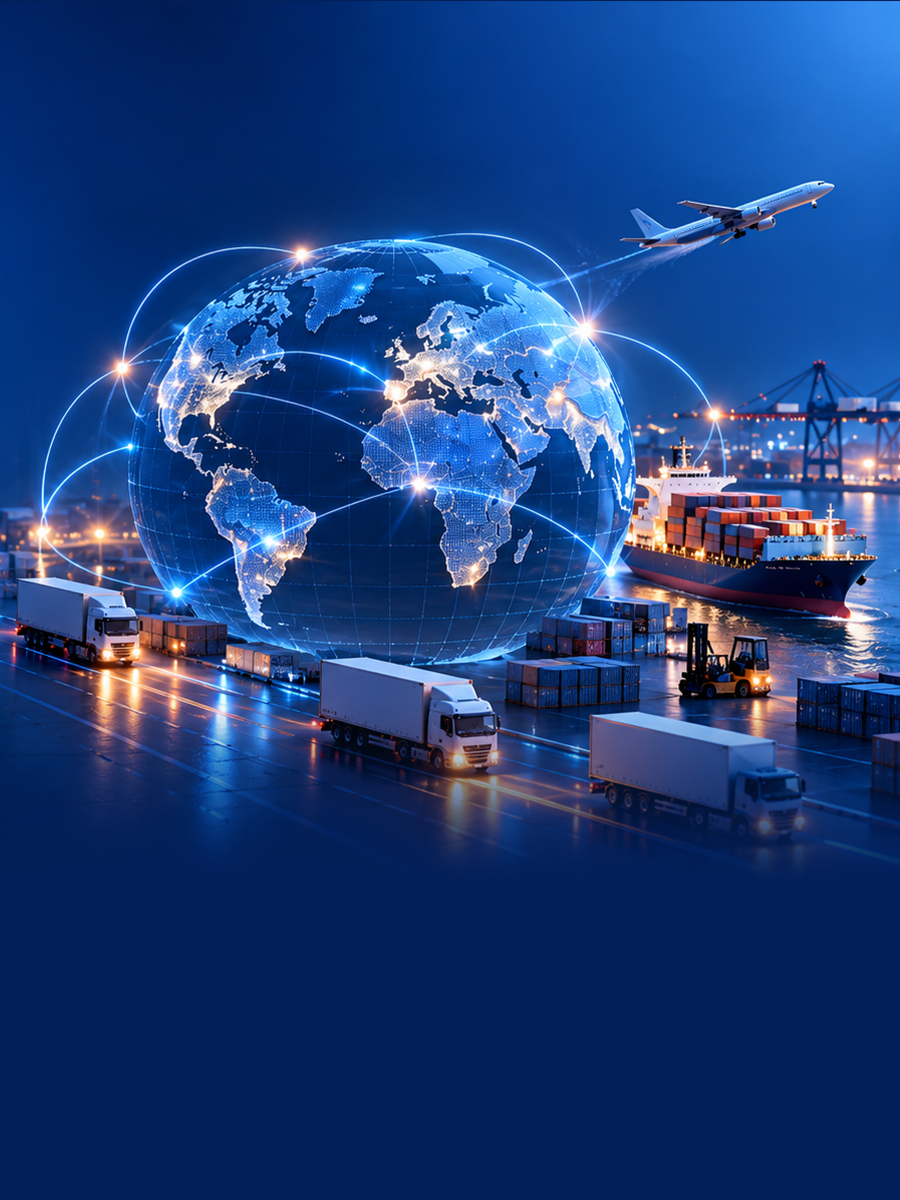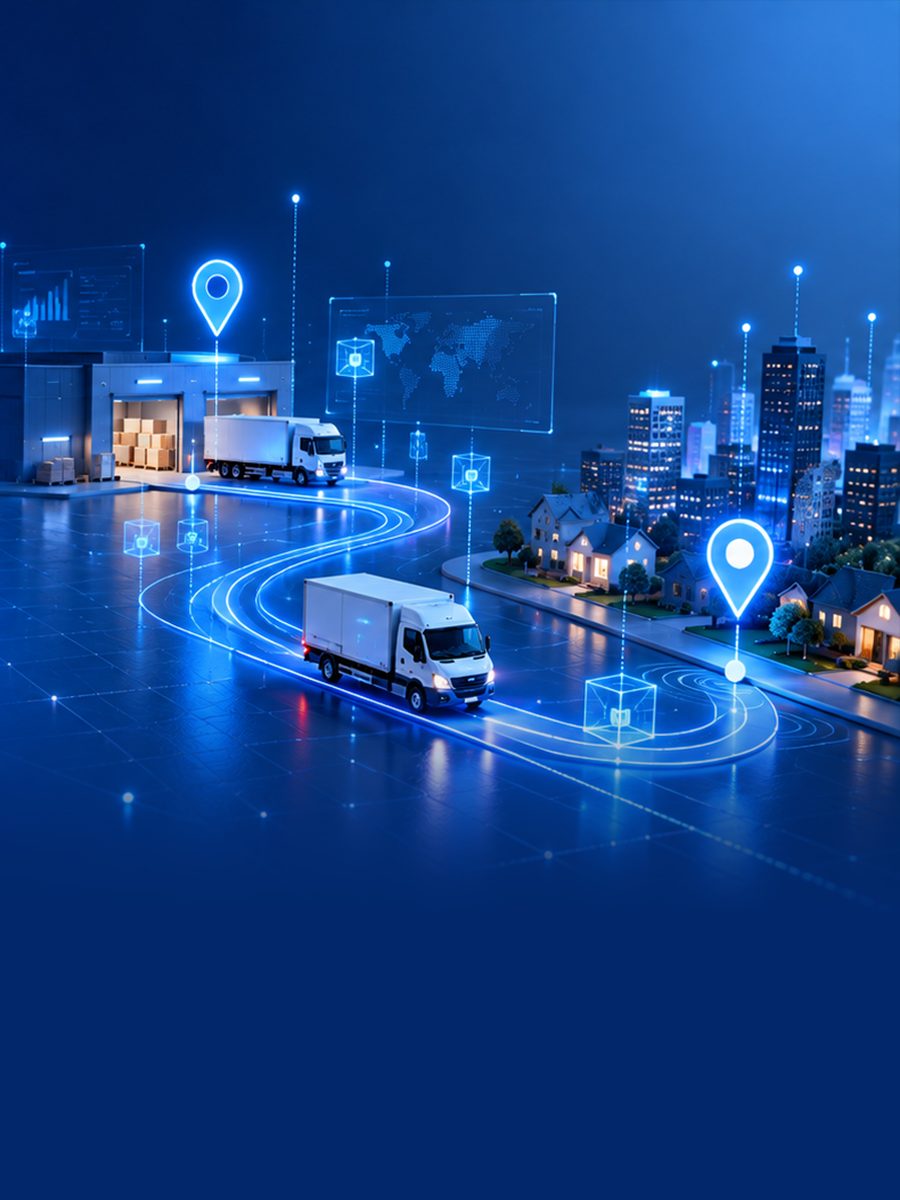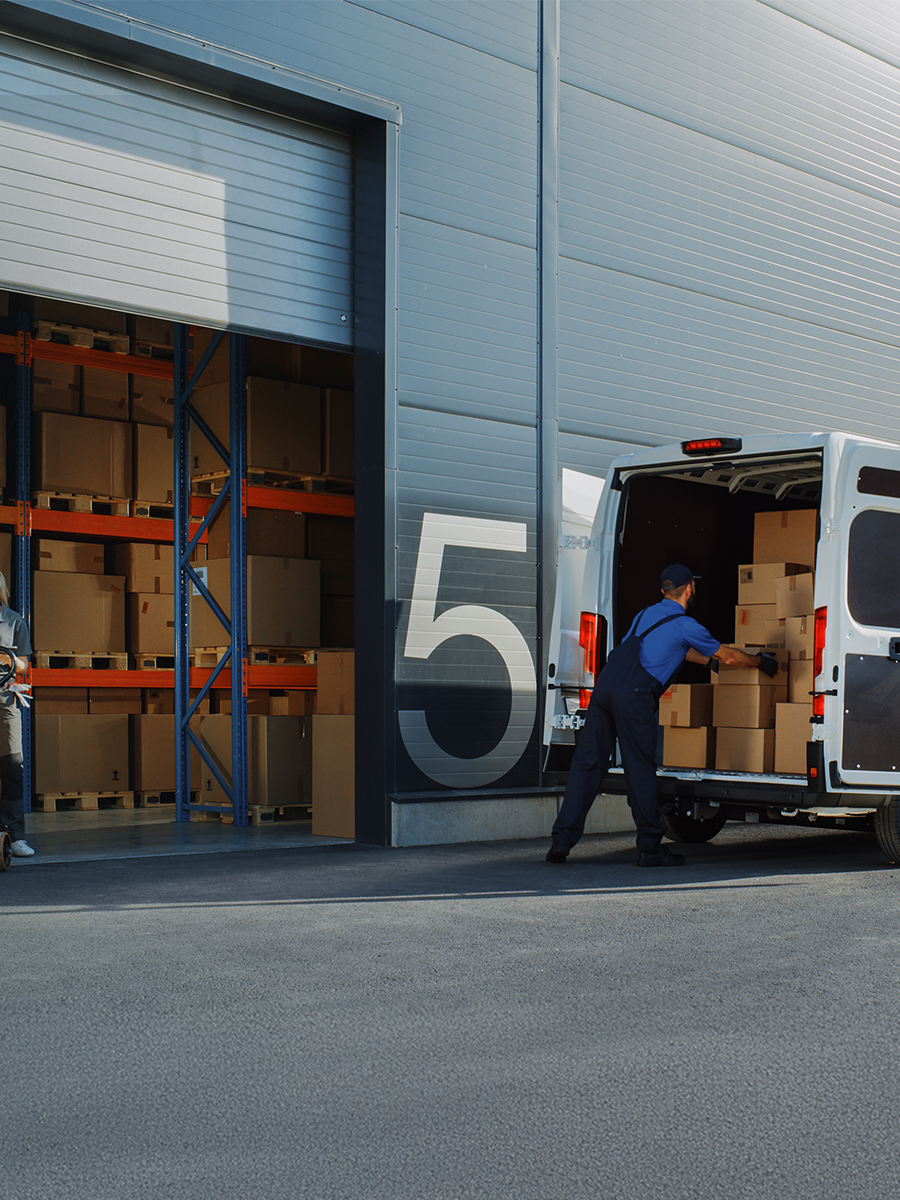


A container crosses an ocean. Clears customs. Moves through a distribution network that spans time zones, regulatory jurisdictions, and transport modes without a single notable disruption. Thousands of dollars in freight, insurance, handling, and compliance. Weeks of coordination. And then, in the final 10 kilometres, a driver circles a residential street for 9 minutes looking for parking, the customer isn't home, and the delivery fails.
That failed attempt costs roughly $17.78. Sounds small. Multiply it across an operation handling thousands of deliveries daily, and the figure stops being small very quickly. But the cost that actually matters isn't the redelivery. It's the customer who doesn't come back. 84% of consumers say a poor delivery experience is enough to stop them buying from a brand entirely. Not reduce. Stop.
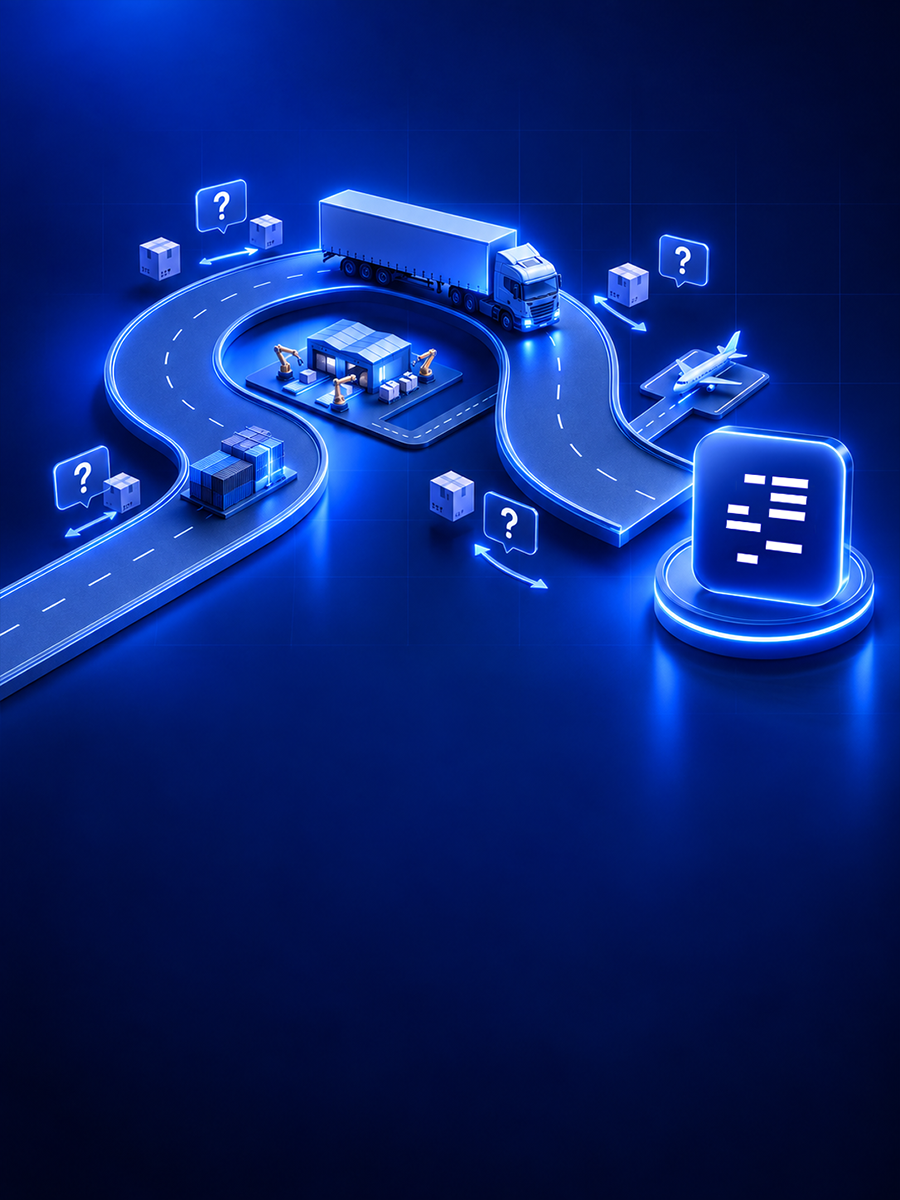
The last mile is the only part of the supply chain your customer actually experiences. They never see the warehouse. They don't know about the customs clearance. They have no idea how their freight moved from Shenzhen to Rotterdam. What they know is that their package arrived late, or damaged, or not at all, and the driver left it in the rain next to the bins.
This is the most expensive, most visible, most consequential segment of the entire chain. It now consumes more than half of total shipping cost. And every force shaping logistics right now is making it harder, not easier.
The economics are moving in a direction nobody wants to talk about
Here's the tension at the centre of last mile delivery in 2026. What customers expect and what's commercially viable are diverging, and they're diverging fast.
The consumer baseline has been set by a decade of Amazon-conditioned behaviour. Same-day delivery as a standard option. A 2-hour window, not a vague "between 9 and 5." Real-time tracking that updates with every turn the van makes. And free. Ideally always free. 90% of consumers will abandon a shopping cart over shipping costs they don't want to pay.
Delivering against those expectations costs approximately $10 per package. The average amount charged to the customer: $8. That gap exists before anything goes wrong. Before the failed attempt. Before the return. Before the customer service call. The baseline economics of last mile delivery are already underwater, and the pressure is coming from both sides simultaneously: customers demanding more while paying less, and operating costs climbing with congestion, fuel, labour, and regulation.
Where the cost actually sits:
- Labour: 50 to 60% of total last mile expense, and rising with driver shortages
- Fuel and vehicle wear: 30 to 45% combined, with no structural relief in sight
- Failed deliveries: $17.78 per attempt, with first-attempt failure rates running 8 to 20%
- Returns processing: doubling in volume since 2019, with no revenue attached
The last mile used to be 41% of total shipping cost. That was 2018. It's now 53%. The increase didn't come from one place. It came from everywhere at once.
The people problem that signing bonuses can't fix
If the economics are unsustainable, the workforce picture explains why they're not self-correcting.
Half of Amazon's delivery service partner drivers leave within 90 days. Not after a year. Not after a bad quarter. Three months, and half the workforce has turned over. Across major carriers, annual driver turnover exceeds 90%. Nearly half of last mile operators describe filling driver positions as hard or extremely hard.
And it's not primarily a pay problem. Urban delivery driving is a physical, stressful, increasingly unpleasant job. Drivers walk nearly 5 miles a day. They lose an average of 43 hours a year to traffic congestion in the US alone. UK road speeds have dropped measurably since 2020. Every year, routes take longer, carry more stops, and generate more frustration for the same or lower compensation.
The generational pipeline makes it worse. Younger workers represent just 20% of the driving workforce, compared to 35% of the overall labour market. The industry isn't attracting the next generation, and the reason isn't mysterious. Gen Z expects mobile-first tools, AI-assisted routing, and modern in-cab technology as standard. Most last mile operations are dispatching through systems that feel closer to 2010 than 2026. The technology gap isn't just an efficiency problem. It's a recruitment wall.
Meanwhile, the gig economy was supposed to provide flexibility and scale. What it actually provided was a race to the bottom on price, delivered by drivers who don't understand their true operating costs and churn out of the market as soon as they realise the maths doesn't work. Traditional last mile operators are caught between matching gig pricing and maintaining the reliability their commercial clients require. It's not a competition. It's a squeeze.
The mile that now runs in both directions
And then there's the trend that tipped the economics from difficult into structurally broken: returns.
Online return rates have doubled since 2019. From 8.1% to 16.9%. Nearly 1 in 5 deliveries now comes back. Consumers don't just expect free returns. They expect a courier at their door to collect them. They expect it to be as seamless as the original delivery. And they will switch retailers to protect that expectation.
This means the last mile now operates as a two-way street. The same routes, the same drivers, the same networks that struggle to deliver profitably outbound are absorbing an inbound volume that barely existed at this scale half a decade ago. And the reverse mile is structurally less efficient than the forward mile. Returns come back individually, unpredictably, from scattered addresses, with no route density, no consolidation, and no revenue attached.
The real cost of a return isn't the collection. It's the cascade.
A returned product costs the original fulfilment, the customer acquisition, the outbound delivery, the inbound collection, the reprocessing, and potentially the write-off if the item can't be resold. US retailers lose more than $400 billion annually to returns. That's not a logistics line item. It's a P&L event. And the last mile infrastructure absorbing it was never designed for bidirectional operation at this scale.
Global e-commerce is projected to exceed $7 trillion in 2026. Return rates correlate directly with e-commerce growth. The reverse mile isn't a temporary pressure. It's a permanent second operating cost layered on top of a last mile that was already the most expensive part of the chain.
Cities weren't designed for this. And they're actively pushing back.
Underneath all the technology conversations and workforce strategies sits a physical constraint that no software solves. Urban infrastructure was built for a world where delivery meant a few commercial vehicles servicing shops and businesses during working hours. It was not built for the current reality, where residential streets absorb hundreds of delivery vans daily, each one competing for kerbside space with ride-shares, school runs, and construction vehicles.
What's closing in on urban last mile operations:
- Congestion charges in major metros, adding per-delivery cost to every urban route
- Low-emission zones requiring fleet upgrades or exclusion from city centres
- Delivery curfews restricting operating windows, compressing more stops into fewer hours
- Weight restrictions on residential streets, limiting vehicle size and load capacity
- A projected 36% increase in delivery vehicles by 2030, adding 21% more congestion to roads that are already failing
This is why micro-fulfilment, positioning inventory in smaller urban locations closer to the end customer, is growing rapidly. The logic is clean: if the most expensive mile is the last one, make it shorter. But urban real estate is expensive, and the maths only works in high-density metro areas with enough volume to justify the location cost. For everything else — regional delivery, B2B distribution, lower-density suburban and rural routes — the structural challenge remains untouched. A long, congested, unpredictable last mile with no infrastructure shortcut.
96% use AI. 37% are still mostly manual. The gap tells the real story.
The technology narrative around last mile delivery is deceptive. The headlines suggest an industry that's adopted AI and is racing toward autonomous drones and sidewalk robots. The operational reality is less cinematic.
Yes, 96% of transportation professionals deploy AI somewhere. But only 17% are fully automated. 37% remain heavily reliant on manual processes. The gap between having AI and having AI that actually runs your last mile operation is where the real competitive divergence is playing out.
Route optimisation works. It delivers measurable cost reductions. But optimising a route doesn't fix a failed delivery. It doesn't solve a driver shortage. It doesn't make a return profitable. It makes one variable more efficient inside a system where a dozen other variables are simultaneously deteriorating.
The technology that actually changes last mile economics isn't the one that gets the conference keynotes:
- Real-time visibility that gives dispatchers and customers the same information at the same time
- Address verification that catches errors before they become failed attempts — a third of delivery failures trace back to bad address data
- Dynamic delivery windows that match driver capacity to actual demand rather than promises made at checkout
- Integrated operations where delivery, returns, proof of delivery, and customer communication run as one connected layer rather than separate processes stitched together by phone calls and workarounds
The last mile isn't the end of the supply chain. It's the part the customer uses to judge the entire thing.
Everything before the last mile is invisible. The ocean freight, the customs clearance, the warehousing, the line-haul transport. All of it is infrastructure the customer never sees and doesn't think about. The last mile is the only touchpoint. It's where the customer forms their opinion of your operation, your reliability, and your brand.
And right now, 66% of consumers report experiencing a delivery issue in the past 3 months. Among under-35s, it's 79%. Nearly half take their complaints to social media, where a single failed delivery becomes a public verdict on your operation visible to every potential customer in their network.
The last mile isn't going to get cheaper. Congestion isn't easing. Labour isn't getting more available. Returns aren't declining. Consumer expectations aren't resetting to something more commercially reasonable. Every trend points the same direction: more volume, more complexity, more cost, more visibility, more consequence.
The freight businesses navigating this aren't the ones throwing technology at individual symptoms. They're the ones that stopped treating the last mile as the end of the chain and started engineering it as the capability it actually is. Connected to the rest of the operation. Measured on its own economics. Staffed, equipped, and managed as the most consequential mile the business runs.
Because that 53% is going in one direction. And the customer standing at the other end of it is paying attention.
.png)
.png)

.png)

.png)





.png)
.png)






.png)
.png)
.png)



.png)







.png)



.png)












.png)











.png)






.png)
.png)