
Every country maintains lists of individuals, entities, and organisations that businesses are prohibited from trading with. Sanctioned parties, restricted entities, denied persons, embargoed governments. The lists are extensive, they are updated constantly, and they span every major jurisdiction your operation touches.
What makes this your problem as a freight forwarder is something a lot of businesses underestimate. The compliance obligation does not sit only with the buyer or the seller. It sits with every party in the trade chain. The company that moves the cargo, books the vessel, files the customs entry, manages the documentation. That is you. And the penalties for getting it wrong are not theoretical. OFAC civil penalties reach $377,700 per violation. Criminal penalties reach $1 million and up to 20 years imprisonment. In 2025, OFAC imposed $266 million in total penalties across 14 enforcement actions. One mid-sized freight forwarder was fined $840,000, placed under a five-year monitoring agreement, and lost major client accounts.
This is why denied party screening exists. And it is why the way your operation handles it matters commercially, not just legally.
What Denied Party Screening Actually Involves
Denied party screening, sometimes called restricted party screening, is the process of checking every party in a trade transaction against government-maintained watchlists before the shipment moves. Shippers, consignees, intermediaries, notify parties, vessel operators. Every name in the chain needs to clear screening before the cargo can proceed.
The challenge is scale. Governments across the US, EU, UK, Australia, and Asia maintain thousands of individual watchlists, and they update them frequently. OFAC published designation changes nearly weekly throughout 2025. The EU has introduced 19 sanctions packages since February 2022, blacklisting over 2,700 individuals and entities. Names are added, removed, and amended at a pace that no individual or team could manually track.
There is also the ownership dimension. Under OFAC's 50 Percent Rule, an entity owned 50% or more by a sanctioned person or organisation is itself sanctioned, even if it does not appear on any list. Beneficial ownership structures, holding companies, and intermediary networks create compliance exposure that a simple name check will never surface. Screening has to go deeper than the name on the booking.
And it does not stop at who you are shipping for. Modern trade compliance covers what is being shipped, where it is going, and whether the route itself raises concerns. Dual-use goods, controlled technologies, and embargoed destinations each carry their own regulatory requirements. A freight forwarding operation moving diverse cargo across multiple jurisdictions needs compliance infrastructure that can evaluate all of this contextually, at the speed the operation moves.
How CargoWise Handles Compliance Screening
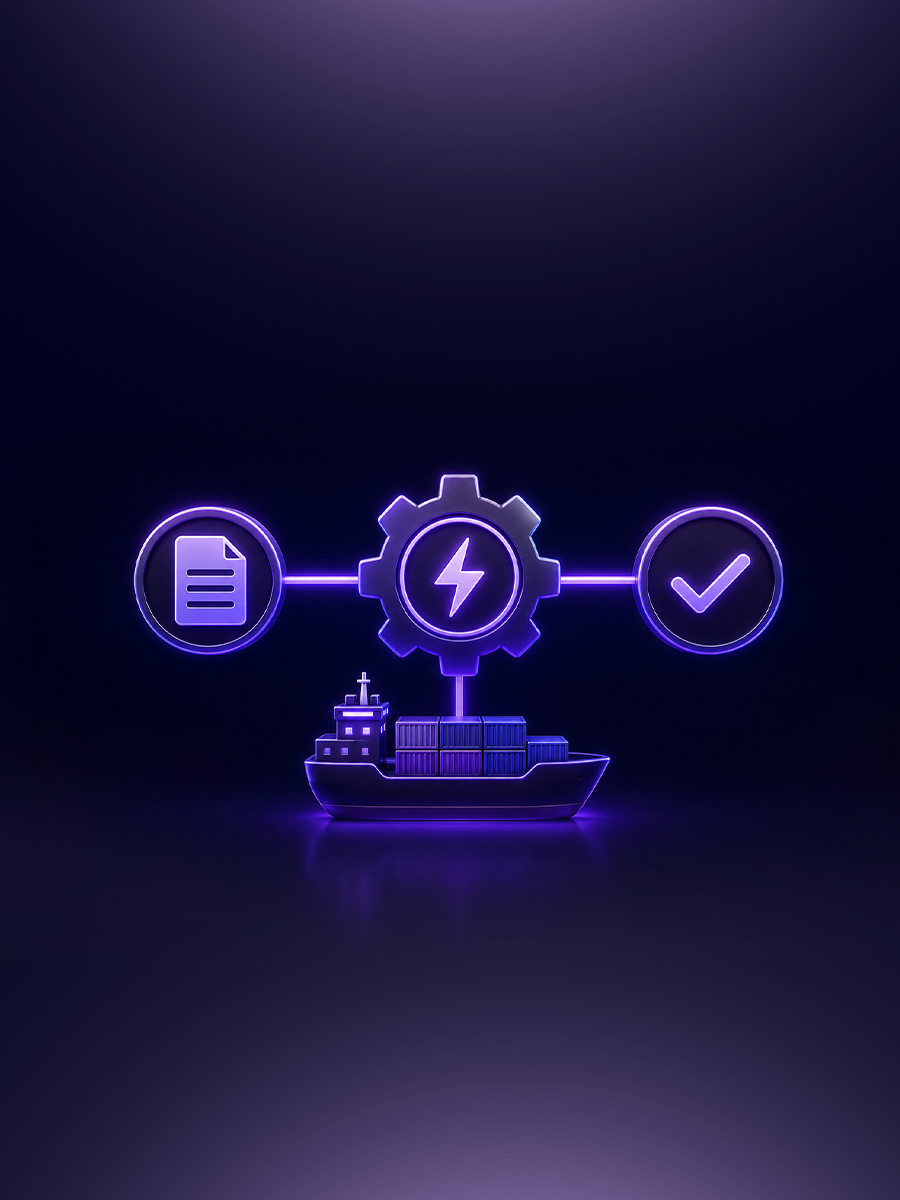
CargoWise approaches trade compliance through three dimensions built directly into the operational workflow: who is involved, what is being shipped, and where it is going. ComplianceWise, the AI-powered compliance layer inside CargoWise, evaluates all three and connects them to identify risk before the shipment is submitted.
Party screening. Every shipper, consignee, contact, and ocean vessel screened against over 2,300 blacklist databases in a single action. Results consolidated and standardised across hundreds of individual denied party lists. Integrated with Dow Jones and Kharon's Sanctions Ownership Research Data, which means the screening covers beneficial ownership structures, the 50 Percent Rule, and complex entity relationships that a standard name match would miss. AI reviews trading party business activities and flags inconsistencies automatically.
Commodity assessment. AI-assisted screening evaluates product specifications, trading party activities, and diversion risk, returning a clear risk rating with contextual notes. Powered by BorderWise, the regulatory intelligence layer inside CargoWise, it covers harmonised code assessment, controlled item classification, and import regulation checks. Dual-use goods, military end-use concerns, and controlled categories assessed inside the workflow as part of the operational process.
Geographic risk. Embargoed countries flagged automatically. AI agents assess diversion risk across trade routes, evaluating high-risk involvement across the full shipment journey. Origin, destination, transshipment points, and intermediary locations all assessed contextually against the regulatory frameworks governing each corridor.
Automated re-screening. The system monitors watchlists for updates and re-screens results from the last 120 days automatically. When a designation changes and affects a party you have previously cleared, you are notified. The compliance status of every recent shipment stays current without your team manually rechecking.
Audit trails and document controls. Every screening action, every result, every decision logged with user identification and timestamps. Operational documents like bills of lading or pickup requests can be blocked from generation until screening is completed and authorised. If any changes are made to a record after creation, CargoWise can automatically re-screen the entity without any user interaction at all. The audit trail the system produces is the kind that satisfies both internal governance and external regulatory scrutiny.
Why This Is a Commercial Conversation, Not Just a Compliance One
Enterprise shippers are increasingly embedding compliance capability into their procurement criteria. The ability to demonstrate automated, auditable screening across every shipment in the trade chain is becoming part of the commercial relationship. A forwarder with system-governed compliance protocols and full audit trails carries a different level of credibility in those conversations than one managing screening through manual processes or standalone tools.
Expanding into new markets means navigating new regulatory frameworks, and the businesses doing it with confidence are the ones whose compliance infrastructure already covers those jurisdictions inside the platform. CargoWise operates across 193 countries, 30 languages, and 162 currencies. The compliance layer scales wherever the business scales.
ComplianceWise is included in every CargoWise Value Pack. The capability is already inside the platform.
How SFL Tech Can Help
What determines whether compliance screening performs is how the workflow is configured within the CargoWise environment. Screening triggers need to fire at the right points in the operational process. Audit trail architecture needs to be confirmed. Document controls need to be active. Re-screening protocols need to be live. BorderWise integration needs to be configured for the jurisdictions the business operates in.
SFL Tech has delivered 800+ CargoWise implementations across 250+ clients in 50+ countries. All-Platinum accredited across every module, including customs. The compliance configuration is built into the implementation scope so that screening, audit trails, and document controls are performing from the first live shipment.





.png)



.png)
.png)