

The tools have changed. The expectations have changed. Here is what digital elevation actually looks like inside a modern freight forwarding operation, and what it takes to get there.
The Toolkit Has Expanded. Dramatically.
A freight forwarder's technology environment used to be a TMS and an ERP. Everything else was email, spreadsheets, and phone calls.
That era is definitively over. The logistics AI market crossed $26 billion in 2025. Companies investing aggressively in AI-driven supply chain operations are reporting 61 percent higher revenue growth than those that are not. One major logistics provider deployed 50 AI agents across its operation and automated 60 percent of check calls, 73 percent of order acceptances, and 80 percent of paper invoice payments, saving tens of thousands of labour hours in production.
The technology available to freight forwarders today is more powerful, more accessible, and more immediately deployable than at any point in the industry's history. But more technology does not automatically mean more value. What separates operators who are genuinely transforming from those still waiting for results is how these capabilities are selected, sequenced, and connected into a single operating environment.
Here is what the modern digital elevation toolkit looks like, and how each capability contributes to measurable operational impact.
AI Document Intelligence
Why it matters now: This is the single highest-impact technology shift in freight forwarding operations over the last two years.
The traditional flow has always been the same: a document arrives by email, someone reads it, someone keys the information into the TMS. Every freight forwarder has tried to optimise this with basic OCR at some point. Most have concluded that the maintenance burden of template-based extraction offset much of the savings.
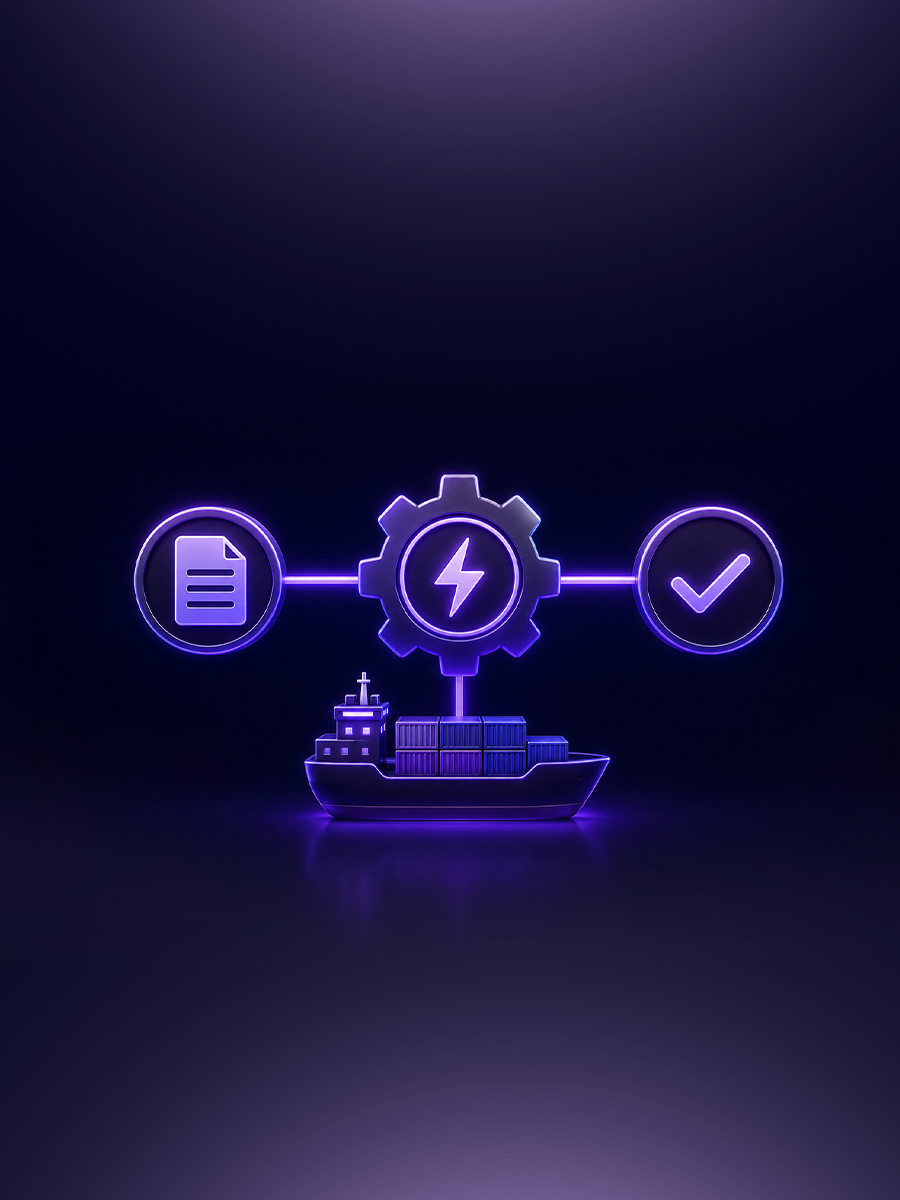
The current generation of AI document intelligence has moved well past those limitations. These platforms understand logistics documents semantically, not just visually. They identify document types automatically, extract fields by contextual understanding rather than pixel position, and cross-validate data across multiple documents within the same shipment file: commercial invoices, bills of lading, air waybills, packing lists, certificates of origin, customs declarations.
WiseTech's acquisition of Shipamax in 2022 brought AI-powered data entry automation inside the CargoWise ecosystem, and the native extraction capability continues to mature with each platform update. For operators already on CargoWise, this means the platform itself is increasingly capable of ingesting unstructured documents and converting them into structured, validated shipment data with minimal manual intervention.
The operational impact is not incremental. Production deployments are reporting processing time reductions of 60 percent and above, with zero manual entry on standard document types. When you consider that mid-size freight forwarders absorb $140,000 to $280,000 annually in costs tied directly to document errors, the return profile is immediate and substantial.
Why it compounds: Every downstream system, integration, and report is only as good as the data that entered the operation in the first place. Clean data at the point of entry raises the performance of everything that follows: your middleware, your financial postings, your customer portal, your compliance filings. This is where digital elevation starts.
Intelligent Middleware and Integration Orchestration
Why it matters now: Every technology capability in this toolkit generates data, consumes data, or both. The orchestration layer is what makes them work together.
Early middleware was a format converter: XML in, JSON out, file delivered. Modern middleware operates as the central nervous system of the operation. It governs data transformation, routing logic, error handling, retry policies, data quality validation, and transaction logging across every system in the technology environment.
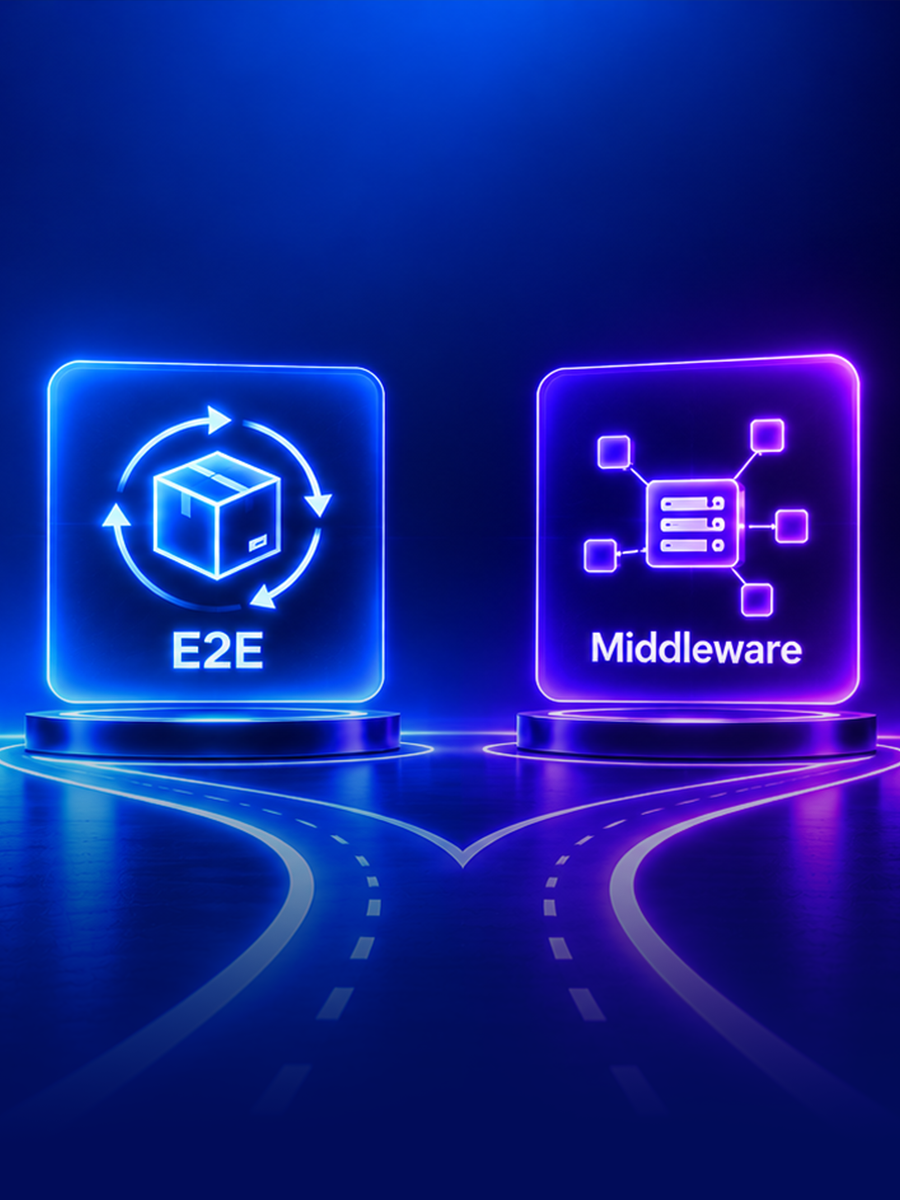
CargoWise's native eAdaptor framework provides the foundation for integration within the WiseTech ecosystem, with XML-based inbound and outbound messaging that covers a wide range of standard logistics data exchanges. E2E connectivity between CargoWise users adds a fast, low-cost channel for partner data exchange without requiring a separate integration layer.
But most freight forwarding operations also connect to systems outside that ecosystem: SAP, Oracle, MYOB, Xero, government customs portals, carrier platforms, and bespoke client systems. That is where a governed middleware layer becomes essential.
SFL Middleware was built specifically for this challenge. It is SFL Tech's proprietary orchestration layer, designed for environments where CargoWise needs to connect to systems that lack native compatibility. For a major Latin American freight forwarder, SFL Middleware delivered 400 hours saved on data entry per month and 2,500 EDI exchanges per month across five key partner connections. For Glovis Canada, it automated financial transactions between CargoWise and SAP, eliminating double entry entirely. For Bollore Transport Logistics, SFL built a custom API middleware with automated SFTP file transfers, standardised data formatting, centralised logging, and intelligent error handling for their European trucking vendor integrations.
Across 250+ integration builds, SFL Tech has delivered 140+ operational integrations, 34+ financial system connections, 10+ customs integrations, and 20+ e-invoicing integrations.
Why it compounds: The orchestration layer determines whether your technology investments work as a system or operate as a collection of disconnected tools. Governed middleware absorbs platform updates, carrier API changes, and regulatory shifts without cascading disruption. Ungoverned point-to-point connections fracture under the same pressures.
Workflow Automation and RPA
Why it matters now: For high-volume, rule-based, repetitive tasks that do not require judgement, workflow automation remains one of the fastest paths to measurable labour savings in freight forwarding.
What many CargoWise users underestimate is how much automation capability already exists within the platform itself. The native CargoWise Workflow Module can automate task assignments, status triggers, milestone notifications, exception escalations, and document generation without requiring external tools. Before investing in additional automation technology, it is worth auditing how much native workflow capability is available and untapped in your existing CargoWise configuration.
SFL Tech's implementation methodology includes a comprehensive workflow audit as part of every engagement. Across 50+ workflow module implementations, the pattern is consistent: most CargoWise environments are running at a fraction of the platform's native automation potential. Unlocking that potential is often the fastest, lowest-risk path to operational efficiency gains because it requires no new technology, no new vendor relationships, and no new integration layers. Just deeper, more disciplined use of what is already there.
Beyond native CargoWise workflows, RPA extends automation to processes that span multiple systems or involve legacy interfaces that lack API connectivity. SFL Tech combines RPA with OCR for clients who need to automate data capture, validation, and posting across CargoWise and external platforms. One deployment for a European vehicle-logistics leader combined RPA with BPO to save 166 hours per month on customs and rate entry alone.
Why it compounds: Every manual touchpoint eliminated is an error source removed, a delay shortened, and a resource freed to focus on higher-value operational and commercial work. The gains are linear in isolation. When combined with clean data entry and governed orchestration, they become exponential.
Financial Systems Integration
Why it matters now: This category rarely generates the excitement of AI or automation, but it consistently delivers among the highest and most measurable returns in logistics technology investment.
The connection between CargoWise and your enterprise financial system is where operational activity converts into financial reality. Invoice generation, accounts receivable, accounts payable, general ledger postings, cost allocation, revenue recognition, multi-currency conversion, tax compliance. When this connection is clean, automated, and governed, the finance team operates with speed and confidence. When it is not, the result is predictable: delayed postings, manual reconciliation, discrepancies between systems, and month-end closes that consume days of effort that should take hours.
The complexity is often underestimated. Financial integration is not a single data flow. It is a matrix: job-level costs, shipment-level revenue, branch-level allocations, intercompany transfers, and regulatory compliance requirements that vary by jurisdiction. E-invoicing mandates are expanding globally. Tax stamping requirements differ by country. The integration layer needs to accommodate all of this while maintaining audit-ready data integrity across every entity in the organisation.
SFL Tech has designed and delivered this specific capability for GWC Logistics (a JSON-based API integration framework connecting CargoWise to SAP, structured around four dedicated integration zones for specialised data handling), for Glovis Canada (automated financial transactions eliminating double entry), and across 34+ financial system integrations and 20+ e-invoicing integrations globally.
Why it compounds: Faster closes. Cleaner audits. Reliable profitability visibility at the job, lane, and customer level. And critically, the confidence to make commercial decisions based on financial data you trust, not data you are still reconciling.
Real-Time Visibility and Predictive Intelligence
Why it matters now: 68 percent of air freight shippers and 62 percent of ocean freight shippers say real-time visibility is now a prerequisite for carrier selection. Your customers expect to see where their shipments are, what condition they are in, and when they will arrive, in real time, on demand.
CargoWise provides native shipment tracking and milestone management within the platform. The Carrier Connectivity Programme continues to expand direct integrations with major airlines, shipping lines, and ground transport operators, enabling real-time data exchange between the platform and the carrier ecosystem.
CargoWise Neo takes this further with a next-generation interface designed for real-time analytics, cross-branch visibility, and a modern user experience that meets the expectations of both internal operations teams and external clients. If you are on CargoWise, Neo is the platform direction, and the investment in adopting it now positions your operation ahead of the curve.
Beyond platform-native visibility, the broader industry is moving from reactive tracking to predictive exception management. The question has shifted from "where is my shipment?" to "what is about to go wrong, and what should I do about it before it happens?" Machine-learning-driven predictive ETAs, automated exception alerts, and scenario simulation through digital supply chain twins are becoming operational tools rather than strategic experiments.
Why it compounds: Visibility without action is a dashboard. Visibility connected to workflows, triggers, and escalation paths through your orchestration layer becomes an operational advantage. When your visibility data feeds directly into CargoWise workflows that trigger automatic notifications, reassign resources, or flag exceptions for human review, you have moved from watching your operation to actively managing it in real time.
Process Mining and Diagnostic Intelligence
Why it matters now: Most freight forwarders know their processes are inefficient. Very few can pinpoint exactly where, exactly how much that inefficiency costs, and exactly which interventions would deliver the highest return. Process mining closes that gap with data, not intuition.
Process mining tools extract event log data from your ERP, TMS, and operational platforms, mapping how work actually flows versus how it was designed to flow. For logistics operators, this means seeing precisely where shipments stall, where manual interventions accumulate, where exceptions cluster, and where automation would deliver the most impact.
This is the diagnostic layer that most logistics technology programmes skip. The instinct is to jump from "we know our operation is inefficient" straight to "let us buy an automation tool." The result is automation applied to the wrong processes, in the wrong sequence, at the wrong priority.
SFL Tech's implementation methodology begins with a diagnostic phase for exactly this reason. Before any module is configured, any workflow is built, or any integration is designed, SFL conducts a current-state assessment that maps operational flows, identifies gaps, benchmarks CargoWise utilisation, and quantifies the cost of existing inefficiencies. This diagnostic discipline ensures that every technology intervention targets the highest-impact opportunity first rather than the most visible one.
Why it compounds: A targeted diagnostic before deployment means every dollar of technology investment goes to the right place. The most expensive technology decision in logistics is not choosing the wrong tool. It is deploying the right tool against the wrong problem.
Agentic AI: The Emerging Frontier
Why it matters now: This is the category to watch over the next twelve to twenty-four months. Agentic AI systems interpret context, assess options within defined boundaries, and take action across multiple platforms without a human initiating each step. Where RPA follows scripts, agentic AI makes operational decisions.
Early production deployments in the logistics industry are targeting the decision points that consume the most human hours relative to their complexity. Automated check calls that interpret carrier responses and update milestones intelligently. Quote generation that pulls rates, compares across carriers, and returns priced options without human intervention. Exception handling that identifies disruptions, evaluates probable cause from historical patterns, and initiates corrective action. Customer communication that drafts contextual, accurate status updates from live shipment data.
Gartner's 2026 supply chain research is clear on the prerequisite: start with low-risk use cases and build strong foundations in data quality, integration, and governance before expanding AI autonomy. Agentic AI amplifies whatever operating environment it is deployed in. Clean data and governed architecture, it compounds value. Fragmented data and ungoverned connections, it compounds risk at speed.
Why it compounds: This is the capstone of the digital elevation toolkit. Every other capability in this article contributes to making agentic AI safe and effective to deploy: document intelligence cleans the data, orchestration governs it, visibility provides real-time context, process diagnostics identify the right deployment targets, and workflow automation handles the repeatable tasks. Operators who build these foundations now will be positioned to adopt agentic AI capabilities as they mature, from a position of strength rather than scrambling to retrofit.
Where This All Leads
The technology toolkit available to freight forwarders in 2026 is extraordinarily powerful. But the value does not come from any single capability. It comes from how they connect, reinforce, and compound within a governed operating environment.
AI document intelligence raises data quality at the point of entry. Intelligent middleware governs how that data flows across every system. Workflow automation eliminates manual touchpoints on repetitive processes. Financial integration ensures operational activity posts accurately and compliantly. Visibility and predictive intelligence surface risk before it escalates. Process diagnostics ensure every technology investment targets the highest-impact opportunity. And agentic AI, when the foundations are ready, begins to make and execute operational decisions at a speed and consistency no manual process can match.
Each layer enables the next. The compounding is real. And it is what separates freight forwarders who are genuinely elevating their operations from those who have invested in technology but are still waiting for the return.
SFL Tech delivers the technology architecture that connects these capabilities into a single operating environment for freight forwarders and logistics service providers worldwide. From our proprietary SFL Middleware and AI-enabled document processing to financial systems integration, workflow automation, and end-to-end CargoWise optimisation, we bring the connective layer that makes every technology investment perform. To explore what digital elevation looks like for your operation, contact us at connectwithus@sfltech.ai.
.png)
.png)

.png)

.png)





.png)
.png)






.png)
.png)
.png)



.png)







.png)



.png)












.png)










.png)


.png)
.png)