
SFL helped RTW move from separate systems across Forwarding, Customs, Warehousing and Transportation to a more connected CargoWise operating model—reducing data-entry tasks by 80% while strengthening financial controls, visibility and governance across the business.
By early 2022, RTW had reached the point where its technology architecture needed to catch up with the business it had become.
The company had expanded across 16 locations with around 400 employees, broadening its service portfolio beyond freight forwarding into Customs brokerage, trucking and Warehousing. The systems behind the operation, however, still reflected different stages of that growth. Forwarding, AMS, import and export declarations, Warehousing and Transportation were being managed across separate environments.
The issue was not that those systems could not perform their individual jobs. It was what happened when one shipment had to move between them.
Information had to be entered again. Teams relied on hand-offs between applications and departments. Visibility was harder to maintain across the full job. Financial and compliance controls sat alongside the operation rather than moving with it.
RTW made the decision to move to CargoWise in February 2022 because it wanted a different foundation for the next stage of the business: one platform capable of connecting more of the operation from shipment creation through Finance, compliance and customer visibility.
SFL's role was to make sure the implementation did more than consolidate software. It had to redesign how information, controls and people moved through the business.
The Client
RTW USA has been registered as a freight forwarder in California since 2016 and provides freight forwarding, Customs brokerage, trucking and Warehousing services.
At the time of the programme, the wider operation had approximately 400 employees across 16 locations, with a group structure spanning RTW USA, RTW Indonesia, RTW Singapore and Sarah Group.
Growth had expanded both the geographical footprint and the number of services RTW needed to coordinate. Moving to CargoWise was therefore not simply a technology refresh. It was an opportunity to create a stronger common operating model across a business that was becoming more complex.
The Challenge: The Business Had Expanded. Its Systems Had Expanded With It.
RTW's existing environment had been built around specialist systems for different parts of the operation.
That worked while each function could largely operate within its own boundaries. At 16 locations, the connections between those functions became just as important as the systems themselves.
Shipment information could have to move between Forwarding, AMS, import or export declarations, Warehousing and Transportation. Each hand-off created another point where information could be re-entered, checked, communicated or reconciled.
For users, that meant unnecessary repetition. For management, it meant the operational picture was spread across multiple systems. For IT, every additional platform introduced another environment to maintain.
There were also specific controls RTW wanted to strengthen. TDS compliance needed greater visibility. Finance required tighter credit controls. Exchange-rate maintenance was still an operational task. Shipping instructions and carrier bookings carried risk when information was handled manually.
But technology was only one side of the programme.
RTW was asking hundreds of employees to change established ways of working. Local processes had developed around the systems and teams using them. Moving to CargoWise meant deciding which of those practices should become common across the group, which needed to remain locally relevant, and how users would make the transition without disrupting the operation.
The implementation therefore had two objectives running in parallel: create one stronger technology foundation and make that foundation workable for the people running the business every day.
Why RTW Chose SFL
RTW needed an implementation partner capable of working across the operating model, not simply configuring CargoWise modules.
SFL brought:
- End-to-end CargoWise implementation capability across Forwarding, Finance, Customs, Workflow, Integrations and the wider logistics operation.
- Process design before configuration, allowing the future-state operation to be defined before the platform was built around it.
- Global-rollout and change-management experience for an implementation involving multiple entities, locations and user groups.
- Integration capability to bring external information such as exchange rates into CargoWise without creating new manual processes around the ERP.
- Financial and operational control design, including credit controls, approval workflows and release conditions embedded into day-to-day activity.
- Post-go-live continuity, ensuring the environment remained supported as users transitioned and the operating model continued to develop.
That approach reflects SFL's wider implementation methodology today: CargoWise is treated as an operating platform, not an isolated IT deployment. SFL's current global-rollout practice has delivered 895+ implementations across more than 50 countries, with role-based training, finance, compliance, workflows and integrations designed into the implementation rather than added after go-live.
The SFL Solution: Design the Operation Before Building the System
SFL began by mapping the present state against the future state RTW wanted to create.
That meant looking beyond individual system functions. The team reviewed processes end to end, examined existing SOPs, identified the people and resources required from both RTW and SFL, and mapped the tasks and delivery dates needed to move the programme forward.
The reason was simple: consolidating five operational areas into CargoWise would have little value if the old hand-offs, duplicate activity and local workarounds were simply reproduced inside the new platform.
The design therefore focused on where information should originate, how far it should move without intervention, where controls belonged, and what still required human judgement.
Connecting the Work That Had Previously Sat in Separate Systems
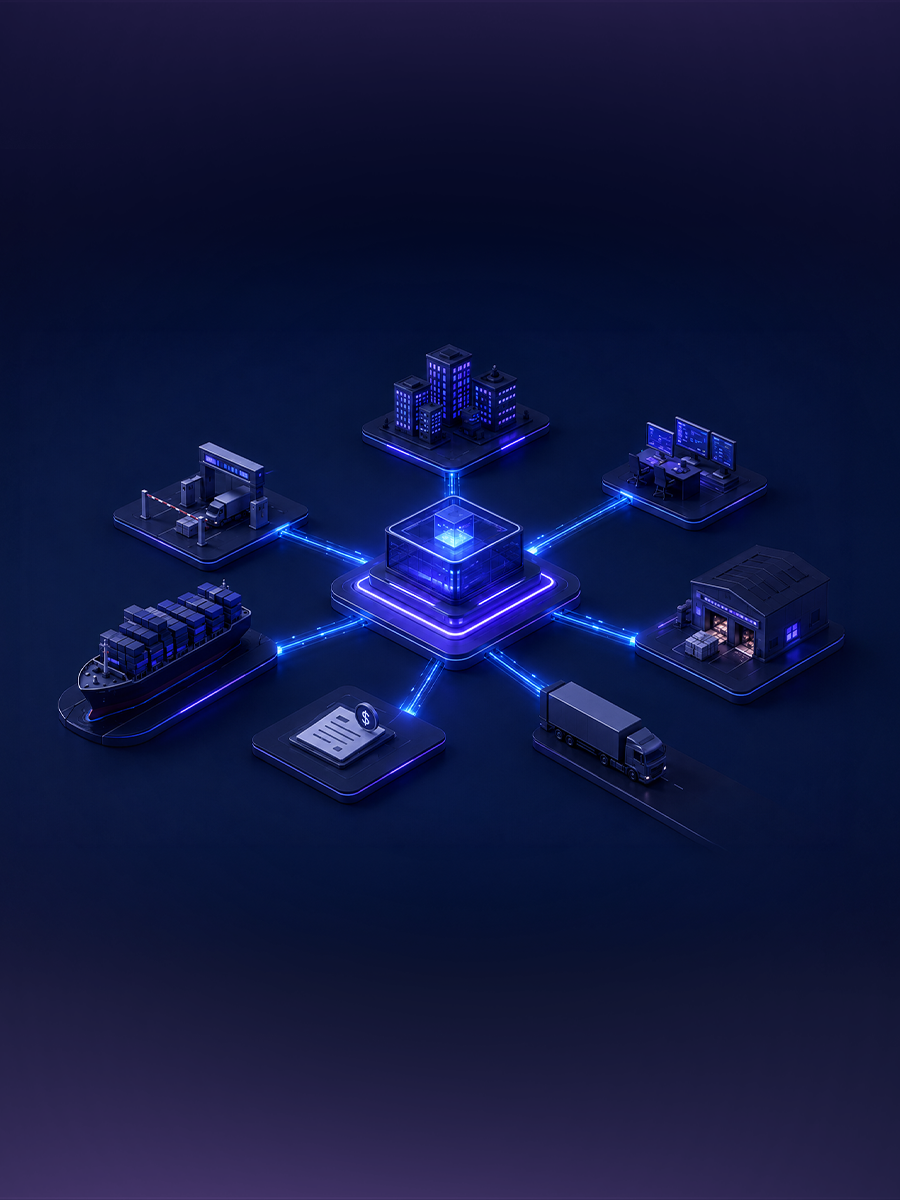
The most fundamental change was creating a common CargoWise environment around processes that had previously operated across separate systems.
Forwarding became part of a wider operating flow rather than an isolated starting point. Shipping instructions, carrier bookings, compliance activity, financial controls and visibility could increasingly work from information already held within CargoWise instead of requiring teams to recreate it elsewhere.
That is where much of the data-entry reduction came from.
SFL also looked for information entering the operation from outside CargoWise. Exchange rates were a clear example. An API was implemented to push exchange rates directly into CargoWise twice daily, replacing another recurring maintenance activity with an automated data flow.
The design principle remained consistent: when reliable information already existed electronically, RTW's people should not have to become the connection between one system and another.
Building Financial Controls Into the Shipment Lifecycle
The implementation also gave RTW an opportunity to move important financial controls closer to the operational activity generating the risk.
SFL configured full credit-control functionality within Forwarding, allowing Finance controls to operate as part of the shipment process rather than as a separate check later. Credit notes required Finance Manager approval before posting, helping protect the business against unnecessary under-recovery.
The Delivery Release Order process was also configured around specific conditions. Goods could be released only after the appropriate requirements had been satisfied, including relevant original documentation, proof of payment, cash-book posting, overdue-invoice checks and account-hold status.
CargoWise was now connecting operational action with the financial conditions behind it. Instead of Finance discovering exposure after the shipment had moved, selected controls could influence what the operation was allowed to do next.
Strengthening Compliance Without Adding Another Process
TDS compliance was another area where RTW needed greater control.
SFL developed a customised TDS report linked to VGM filings completed on carrier websites, giving the business a clearer way to manage the required compliance information.
This mattered because the programme was not intended to create a separate compliance layer around CargoWise. The stronger model was to bring compliance evidence back into the operating environment so it could be monitored alongside the shipment.
The same thinking informed the work around shipping instructions and carrier bookings. These processes carry financial and operational consequences when information is wrong, so SFL worked with RTW to bring them into a more controlled system process rather than leaving accuracy dependent entirely on manual handling.
Making a Global Change Visible to Leadership
The scale of the programme introduced another problem: senior management needed visibility into the transformation without becoming involved in every implementation task.
SFL built a BI Project Report to give RTW's C-suite a 360-degree view of the programme.
This gave leadership visibility into projects being managed by SFL while allowing the project team to continue handling the operational detail. Instead of relying on periodic status conversations or disconnected updates, management had a clearer view of how the transformation itself was progressing.
That governance layer was important because the implementation was changing more than technology. It was changing processes, responsibilities, controls and user behaviour across a 400-person organisation.
Change Management Was Part of the Build
A common platform only works as a common platform if people use it in a common way.
RTW understood that moving hundreds of employees into a new operating environment would require more than technical training. Users needed to understand what the change meant for their own jobs—what would disappear, what would now happen automatically, which controls would become system-driven and where responsibility would shift.
SFL therefore incorporated user roles, access rights, testing and training into the implementation itself.
Workflows were configured around the actual business rules behind a process: who could request an action, who needed to approve it, what financial limits applied and when additional approval was required.
That made adoption part of the system design rather than something addressed after configuration had already been completed.
It also helped RTW move toward greater consistency without dismissing the knowledge that already existed within individual teams. The objective was not to erase local expertise. It was to make sure that expertise operated inside a stronger common framework.
The Results
The shift to CargoWise changed how information moved through RTW and reduced the operational work created by its former system landscape.
- 80% reduction in data-entry tasks — Information could move between CargoWise processes instead of being repeatedly recreated as work passed from one function to another.
- One operating platform across previously separate processes — RTW reduced its dependency on multiple systems spanning Forwarding, AMS, declarations, Warehousing and Transportation, creating a stronger common data foundation.
- Greater visibility for employees and customers — Consolidating more operational information into CargoWise made shipment information easier to surface internally and through customer-facing tools.
- Less internal email and manual coordination — As information became more accessible within the platform, teams had less need to use email simply to establish status or hand information between departments.
- Exchange rates automated twice daily — API connectivity moved rate information directly into CargoWise rather than relying on recurring manual maintenance.
- Stronger credit and release controls — Credit-note approvals, credit controls and DRO conditions connected Finance more closely to operational decisions.
- TDS compliance strengthened — Customised reporting around VGM filings gave RTW better control over an important compliance requirement.
- A stronger platform for future automation — The implementation created a common operating base from which RTW could continue developing integrations, visibility and Warehouse capability.
The 80% reduction is important because it did not come from one dramatic automation.
It came from systematically removing the moments where information stopped, changed systems and required a person to start the process again.
Protecting the Model After Go-Live
For RTW, go-live was not the point at which the transformation became finished. It was the point at which the new operating model became business-critical.
Sixteen locations were now depending on a more connected CargoWise environment. Financial controls were built into operational processes. Integrations were moving information into the platform. Users across the organisation were learning new workflows.
The risk after a rollout of this size is not simply whether the system remains available. It is whether the model begins to drift. RTW's original programme therefore included 24/7 post-go-live support through Care by SFL to keep the operation moving as the new environment settled.
Care is not simply a support desk for resolving isolated CargoWise tickets. It gives businesses continued access to specialist capability across Operations, Finance, Customs, Workflow and Integrations, with structured governance around the environment as it evolves. SFL currently supports more than 152 businesses through Care, spanning post-go-live continuity, root-cause resolution, configuration, reporting, automation and ongoing platform optimisation.
For RTW, that model is particularly relevant because the implementation was designed to create commonality across the business. The value of that work depends on maintaining it as locations, customers and processes change.
The next opportunity had already been identified: Warehouse integrations.
Rather than beginning another disconnected technology project, RTW now had a common CargoWise foundation on which that next stage could be built.
Planning a CargoWise Global Implementation?
Moving to CargoWise creates an opportunity to do considerably more than migrate data and switch modules on.
It is the moment to decide which processes should become common, where local requirements genuinely need to remain different, how Finance and Operations should interact, which information should move automatically and how the organisation will govern the environment after go-live.
SFL Tech's CargoWise implementation practice spans 895+ implementations across 50+ countries, combining operating-model design, role-based training, Finance, compliance, workflows, integrations and post-go-live Care.




.png)


.png)
.png)