

A logistics operation can process more freight every year and still become progressively harder to run.
The reason is rarely one dramatic failure. Capacity tends to disappear in smaller places: information entered twice, jobs waiting for another department, people checking milestones that should already be visible, exceptions reaching teams too late, completed work sitting before it can be billed.
Individually, these are minutes. Across a network, they become operating capacity.
That is the more interesting idea behind CargoWise’s research into productivity in global logistics. When WiseTech Global and Reuters Events surveyed 488 logistics and supply-chain professionals, 45% identified technology investment as the biggest opportunity to improve productivity, followed by process improvement at 34%. Yet 35% also said they were not measuring productivity against specific targets.
That combination is revealing.
The industry clearly understands that technology matters. The harder question is whether businesses are redesigning the work around that technology deeply enough to create measurable gains.
Because productivity in logistics is shaped by the entire flow of the operation: how information moves, where work pauses, how often teams intervene, how quickly exceptions surface and how much skilled capacity is spent on activity that should already have been removed.
The First Productivity Gain Comes From Removing Work
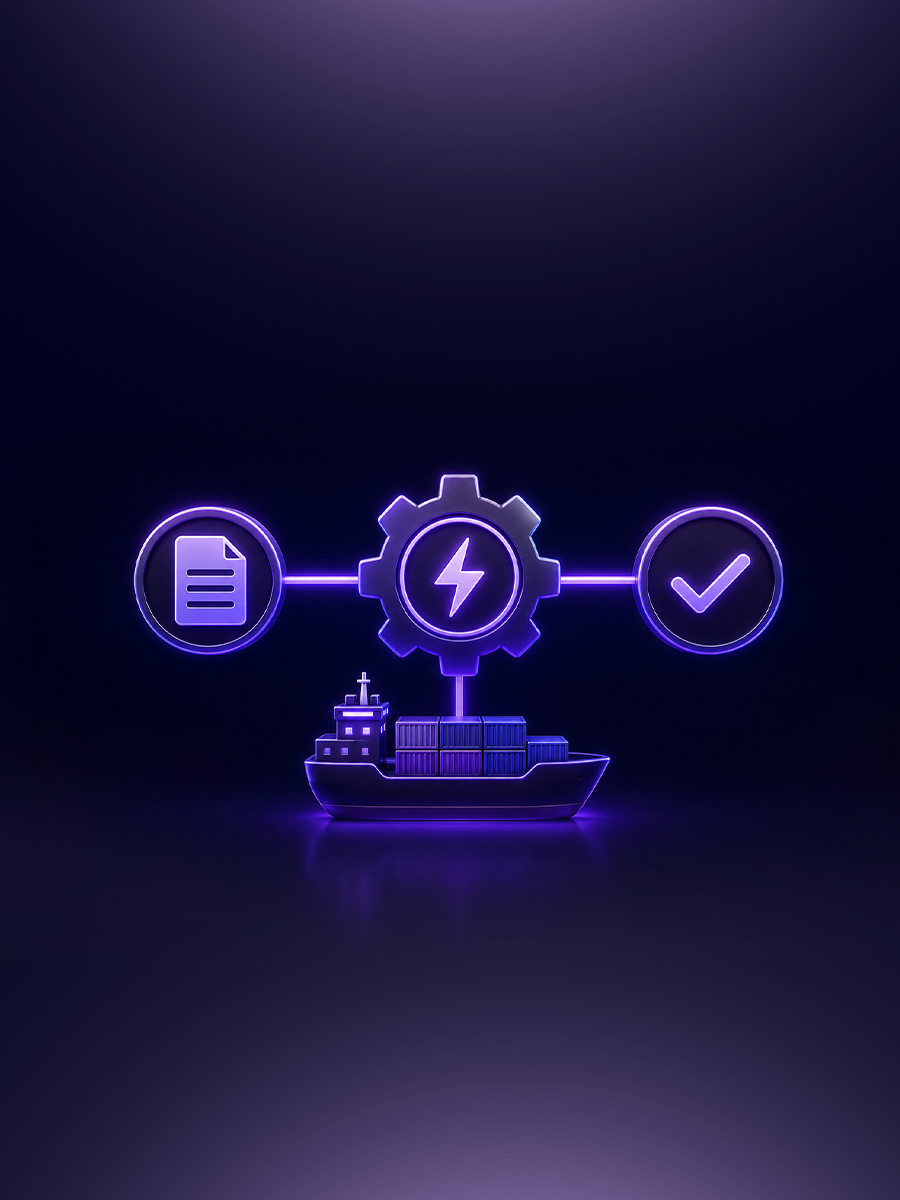
One of the strongest ideas in CargoWise’s productivity framework is the progression from eliminate, to automate, to accelerate.
That sequence gives logistics businesses a much better starting point than simply asking what can be automated.
- Eliminate duplicate capture, avoidable checking, unnecessary handovers and repetitive information requests.
- Automate the repeatable activity that still needs to happen, using workflows and system logic to move routine work consistently.
- Accelerate the redesigned process once unnecessary activity has been removed and the remaining work can scale cleanly.
The difference is significant.
If Customs receives information that Forwarding already captured, improving the second data-entry process saves time. Removing the second entry releases capacity altogether.
If Customer Service repeatedly answers status requests, improving response templates makes the team faster. Giving customers access to the information before they ask changes the workload itself.
If an operator checks every shipment milestone manually, a better checklist creates marginal improvement. A workflow that responds to the event automatically removes the check from the process.
This is where technology begins to affect the economics of the operation.
The strongest productivity gains often come from reducing the amount of work required around the shipment, rather than simply increasing the speed at which that work is completed.
Productivity Maturity Is Uneven by Nature
CargoWise’s nine-phase productivity model is useful because it reflects how logistics businesses actually develop.
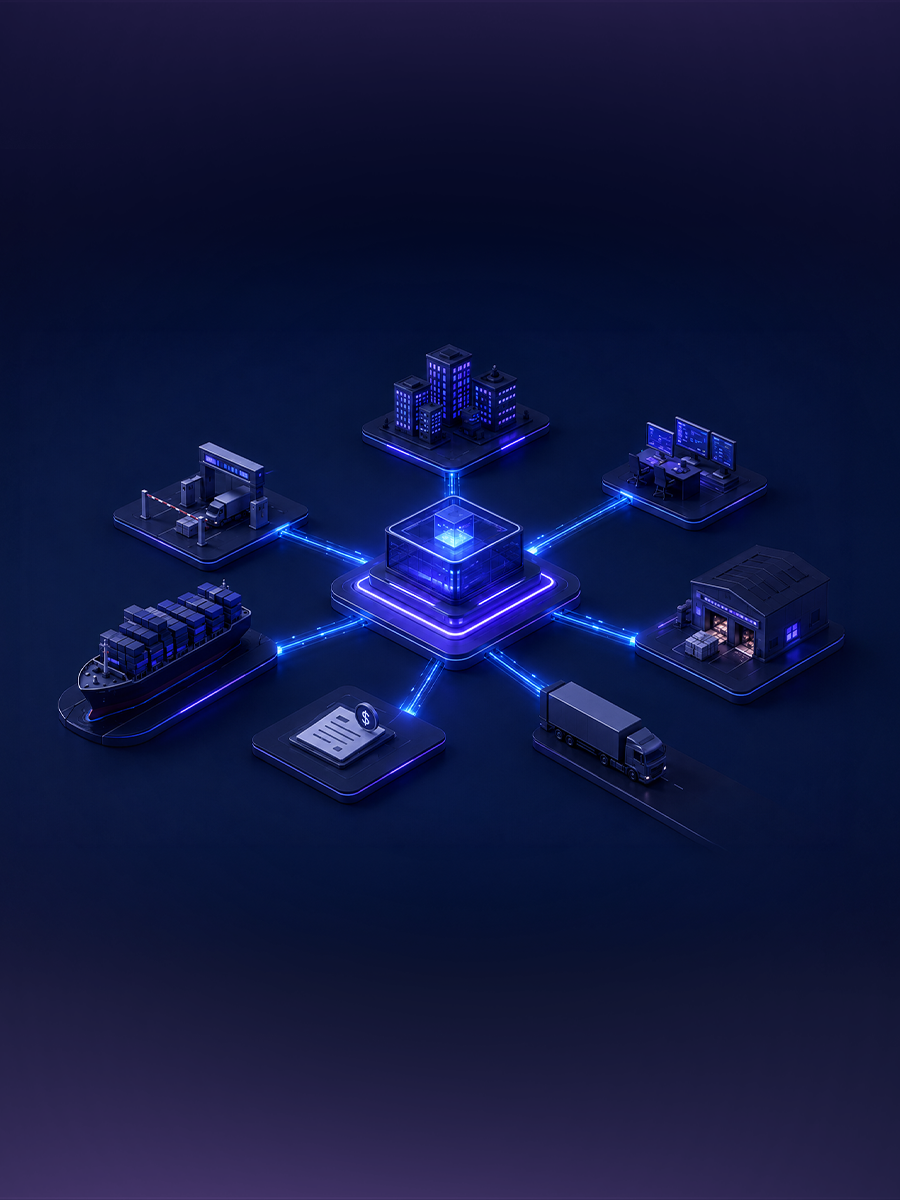
The journey moves from manual and computerised operations through enterprise and supply-chain integration, structured workflow and workflow automation, before reaching more advanced disciplines such as constraint management, buffer management and work-mix management.
The nine phases can be understood more simply as three levels of operating maturity.
1. Create the digital foundation
Manual work becomes structured and information begins moving through connected systems. The immediate gains are visibility, consistency and fewer breaks in information flow.
2. Orchestrate the work
Processes move into defined workflows. Repeatable activity is automated. Teams gain clearer ownership, routine work requires less intervention and exceptions become easier to identify.
3. Manage the flow
Once the operation is sufficiently structured and visible, management can focus on constraints, capacity, buffers and work mix. Productivity becomes less about individual task performance and more about how the entire operation absorbs and prioritises demand.
Most logistics businesses occupy several of these levels at once.
A Customs team may already work through highly automated electronic processes while Warehousing remains more manual. Forwarding may have strong workflow discipline while Finance still waits for operational information before invoicing. One country may run a highly standardised model while another carries years of local process variation.
That unevenness is important because the next productivity opportunity usually appears where maturity drops.
A highly efficient process upstream can still lose time when information reaches a weaker point downstream. The organisation therefore needs to follow the movement of the work rather than judge maturity by the sophistication of individual departments.
Once Work Is Structured, the Constraint Becomes Visible
The later stages of CargoWise’s productivity model draw heavily on the Theory of Constraints: identify the point limiting flow, address it, measure the result and then reassess the operation as the constraint moves.
That is particularly relevant in logistics because bottlenecks are rarely static.
At one stage of growth, the constraint may be shipment entry. Once that is automated, Customs becomes the limiting point. Improve Customs and the pressure may move into billing. Increase warehouse throughput and transport capacity may become the next restriction.
The operating model keeps revealing its next weakest point.
Sometimes the constraint is easy to see: an overloaded team, slow clearance or insufficient warehouse capacity.
Others are buried more deeply in the process:
- one approval delaying hundreds of jobs;
- poor master data preventing reliable automation;
- an integration gap forcing manual reconciliation;
- an experienced employee carrying knowledge nobody else has;
- incomplete operational data delaying billing;
- too many routine exceptions competing for the same attention.
This is where productivity becomes a management discipline.
Instead of spreading investment evenly across the organisation, leadership can identify the point currently restricting throughput and concentrate improvement there.
When that point moves, the next priority becomes clearer.
The Higher Productivity Gain Comes From Managing Capacity
Once workflows, automation and data quality reach a certain level, the nature of the productivity challenge changes again.
Management can begin seeing the operation before pressure becomes visible on the floor.
Which teams are approaching overload? Where is excess capacity available? Which work types consume disproportionate operational effort? Which jobs should receive priority? Where are surges beginning to build? How much additional volume can the business absorb before another resource is required?
CargoWise’s later productivity phases—constraint management, buffer management and work-mix management—address exactly this stage.
This is where productivity starts influencing commercial decisions.
Sales can understand which work the operation has capacity to absorb profitably. Management can see the relationship between throughput and resources more clearly. Teams can separate routine activity from genuine exceptions. Surges can be managed deliberately rather than allowing every urgent request to disrupt the wider operation.
The objective becomes resilience as well as efficiency.
Running every employee at maximum capacity may produce impressive utilisation figures, but it leaves little room for the variability inherent in freight. Vessel changes, Customs delays, customer requests and sudden volume shifts will always exist.
A productive logistics operation needs enough visibility to understand where capacity should remain available and where the genuine constraint needs protection.
That creates a much stronger operating model than permanent firefighting.
Technology Only Holds Its Value When People Can Work Differently
CargoWise’s productivity research also gives considerable weight to the human side of transformation.
That is important because logistics knowledge is deeply embedded in people.
Experienced teams have spent years learning how to manage unusual customers, regulatory exceptions, shipment disruptions and process gaps. Some of the workarounds they defend are inefficient. Others contain knowledge the business cannot afford to lose.
A strong productivity programme has to understand which is which.
That makes user involvement, training and change management part of the operating design.
People need to understand:
- what is changing in their role;
- which activities the system will now handle;
- where their judgement still matters;
- how their actions affect the next process;
- what better performance will look like after the change.
The productivity framework describes this as building both the desire and the capability to change. It also places emphasis on continuous learning and certification because the workforce has to develop as the operating model becomes more sophisticated.
That becomes increasingly important as automation removes routine activity.
The human role moves upward.
Operators spend more time managing exceptions. Super-users start improving workflows. Managers work with capacity information rather than simply reacting to workload. Specialist teams concentrate more of their effort on the decisions where experience changes the outcome.
Technology releases the capacity.
The organisation decides how effectively that capacity is redeployed.
Productivity Becomes Real When It Is Measured
This brings us back to the 35% of respondents who said they were not measuring productivity against defined targets.
Without a baseline, almost any digital programme can appear successful.
A system goes live. An integration is completed. A workflow is automated. Users are trained.
Those are implementation milestones.
Productivity needs measures that sit closer to operating performance.
Depending on the business, that could include:
- cost per shipment or transaction;
- manual touches per job;
- time from operational completion to billing;
- processing and cycle time;
- exception volumes and resolution time;
- throughput per team;
- workflow adherence and data quality;
- additional volume absorbed before additional capacity is required.
The purpose is not to create another dashboard.
It is to understand whether the flow of value through the operation has materially improved.
Measurement also prevents one team from optimising itself at the expense of another. A department can become faster while creating more work downstream. An automation can improve throughput while increasing exceptions. A reduction in headcount can look efficient while billing slows.
True productivity has to survive the entire process.
What This Means for CargoWise Operations
For CargoWise customers, the practical implication is that optimisation should begin with the operation rather than the feature list.
Where is work repeatedly waiting? Where is information being recreated? Which teams are operating at very different levels of maturity? What is the current constraint? Which activities still depend on manual intervention because the surrounding process has never been redesigned?
Those questions determine where the next productivity gain sits.
SFL Tech’s 5D methodology—Discover, Define, Design, Enable and Stabilise—follows that same logic. Discovery establishes how the operation is currently performing and where the constraint lies. Definition establishes the future state and the measures that matter. Design addresses the process, CargoWise configuration, workflow, data and integration around it. Enablement prepares teams to work differently, while Stabilisation tests the design under live freight and exposes the next optimisation opportunity.
The response will differ from one operation to another.
One business may need integration. Another may need stronger workflow discipline. Another may already have the technology it needs but be held back by master data, regional process variation or adoption.
The productivity problem should determine the intervention.
The Productivity Opportunity
CargoWise’s research ultimately presents productivity as a progression.
First, remove unnecessary activity. Then automate what still needs to happen. Connect the operation so information can travel further without intervention. Make constraints visible. Manage capacity more deliberately. Equip people to work at the level the technology now allows. Measure the outcome and keep looking for the next limiting point.
That progression is what turns digital capability into operating leverage.
For logistics leaders, the opportunity is substantial because the next unit of capacity does not always require another hire, another system or another transformation programme.
Sometimes it is already inside the business, tied up in duplicated work, weak handovers and processes that have simply become normal.
The strongest productivity gains begin when the operation learns to see that hidden capacity clearly enough to release it.








.png)

.png)
.png)