

The buzzword lost its shine. The technology behind it kept maturing. And the logistics applications that actually work look nothing like what the industry was promised.
Honest Acknowledgement First
The metaverse was supposed to change everything. In 2021 and 2022, the logistics industry was told that virtual warehouses, immersive supply chain simulations, and avatar-based collaboration would reshape how freight moved, how teams worked, and how clients experienced their logistics partners.
Most of that did not happen. Not at the scale or speed that was promised. The hype cycle peaked, the investment frenzy cooled, and the industry quietly moved on to more immediate priorities: AI, automation, integration, visibility.
But something interesting happened while the buzzword faded. The underlying technologies that powered the metaverse vision, digital twins, augmented reality, virtual reality, spatial computing, immersive simulation, kept maturing. And they found their way into logistics operations not through grand metaverse platforms, but through specific, practical applications that solve real problems.
The metaverse as a destination never arrived. The metaverse as a toolkit has.
Digital Twins: The Application That Outgrew the Label
If one metaverse-adjacent technology has crossed decisively from experimental to operational in logistics, it is the digital twin.
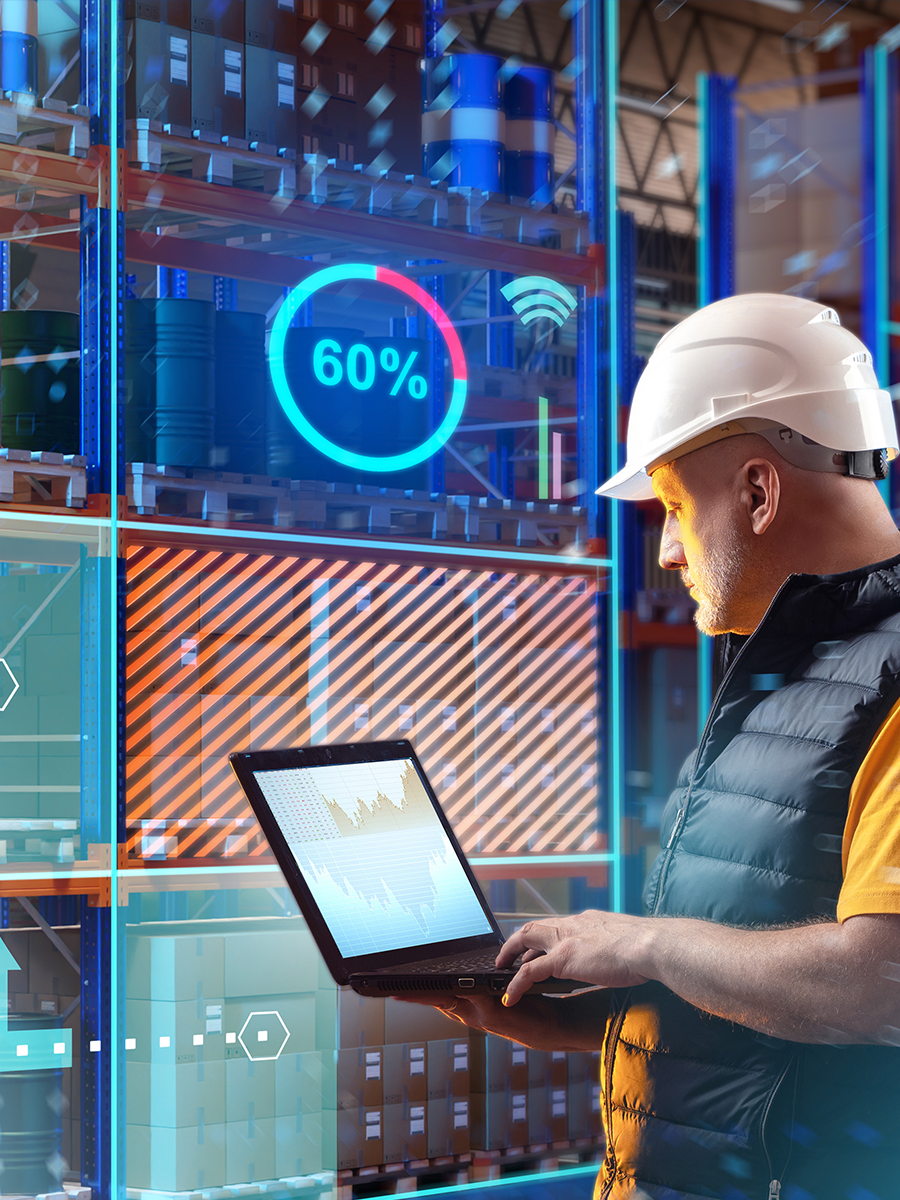
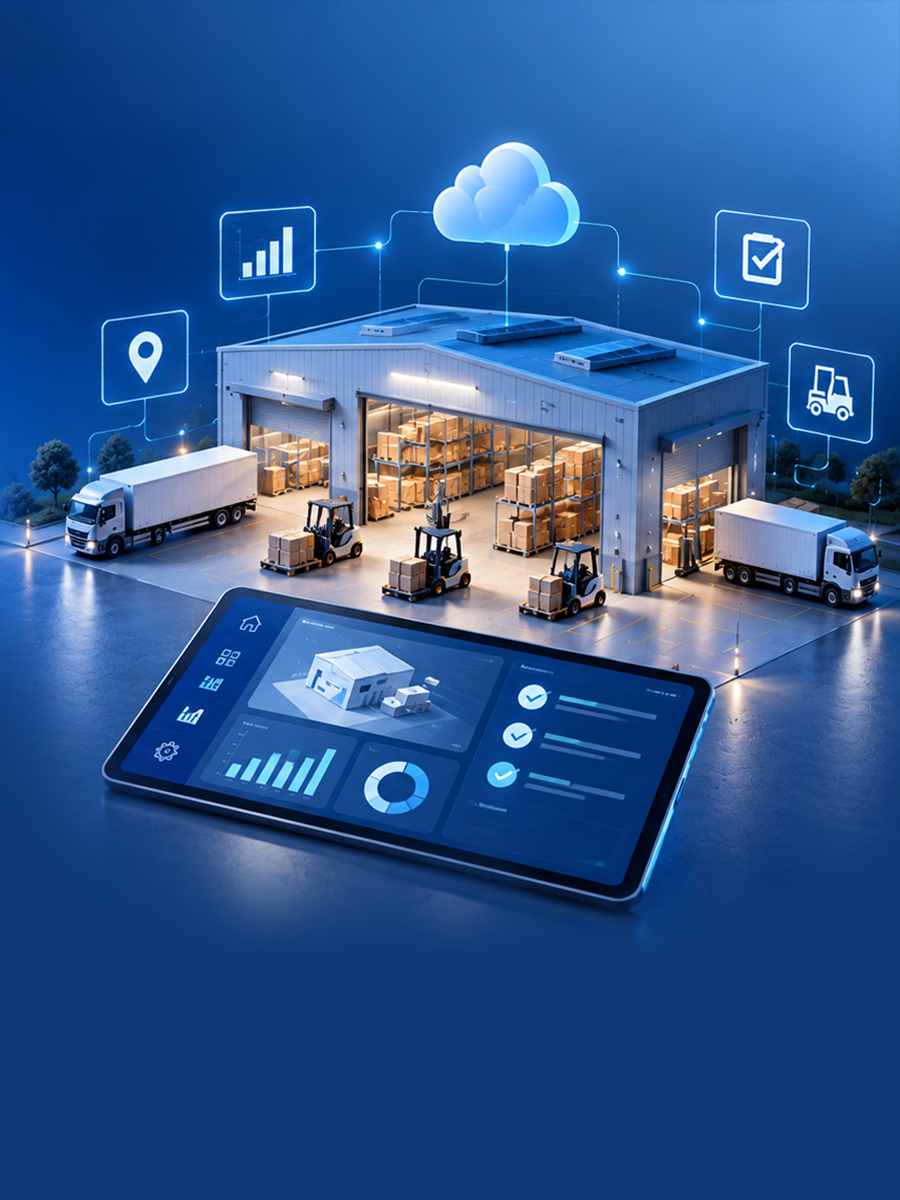
A digital twin is a virtual replica of a physical operation, a warehouse, a distribution network, a port, an entire supply chain, that updates in real time from live data feeds and allows operators to simulate, test, and optimise without disrupting the physical environment.
The concept is not new. What has changed is accessibility. Generative AI has dramatically reduced the cost and complexity of building and running supply chain simulations. What required dedicated modelling teams and months of development three years ago can now be configured in weeks and run against thousands of scenarios overnight.
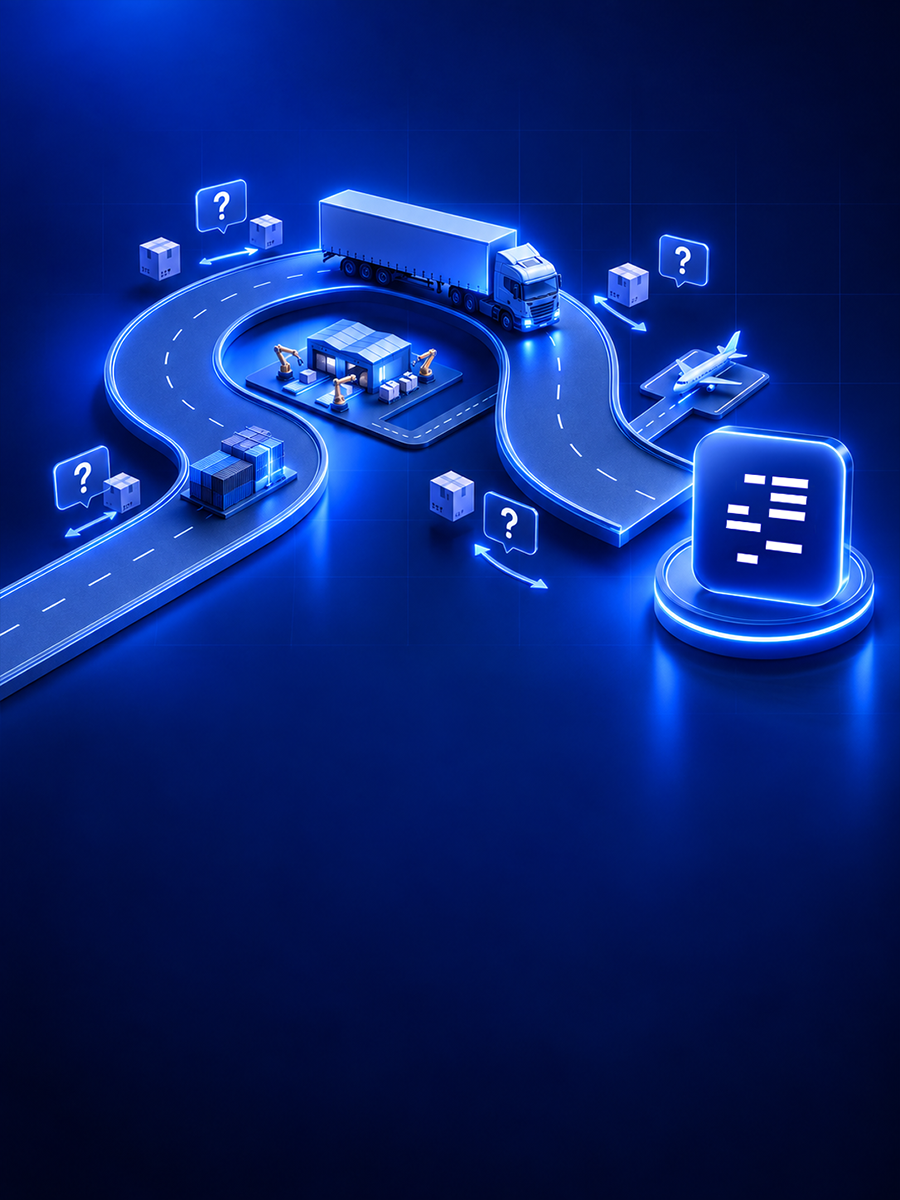
For logistics operators, the practical applications are already delivering measurable value. Simulating the impact of shifting a major trade lane before committing to the change. Modelling what happens to warehouse throughput if volume increases by 20 percent during peak season. Stress-testing a distribution network against port congestion, carrier capacity constraints, or tariff changes. Running disruption scenarios, what if this port closes, what if this carrier service is suspended, what if demand spikes in this geography, and identifying the operational response before the disruption arrives.
Celonis, now recognised as a leader in the Gartner Magic Quadrant for Digital Twin of an Organisation, has brought process-level digital twins into mainstream enterprise use. Dedicated supply chain twin platforms from o9 Solutions, Blue Yonder, and within the SAP and Oracle ecosystems are expanding the category further.
The freight forwarder managing complex multi-geography operations who is not yet using simulation for strategic planning is making decisions with less information than the tools now make available. This is no longer a technology-forward initiative. It is a planning discipline.
Immersive Training: Faster Onboarding, Deeper Retention
One of the quieter successes of immersive technology in logistics has been in training and workforce development.
VR-based training programmes are being deployed across warehouse operations, safety compliance, equipment handling, and process onboarding. The value proposition is straightforward: immersive training allows new hires to experience operational scenarios, practice procedures, and make mistakes in a risk-free virtual environment before they step onto the warehouse floor or into the operational system.
The retention data supports the approach. Studies consistently show that immersive learning produces higher knowledge retention than classroom or manual-based training. For logistics operators dealing with high workforce turnover, seasonal labour surges, and the need to onboard new hires quickly without compromising safety or accuracy, VR training reduces time-to-competency and lowers the error rate during the critical first weeks.
DHL has been one of the more visible adopters, deploying VR training across its global warehouse network for picking processes and operational procedures. But the application extends well beyond warehousing. Customs classification training, hazardous goods handling, new system onboarding for CargoWise implementations, safety and compliance certification, all of these benefit from immersive environments where learners engage actively rather than passively reading a manual or watching a video.
For an industry facing its most significant workforce transformation in a generation, where roles are being redefined by AI and the skills required to succeed are changing faster than most development programmes can keep pace with, immersive training is not a novelty. It is a scaling mechanism for capability development.
Augmented Reality on the Operations Floor
AR in logistics has found its strongest foothold in warehouse and distribution operations, and the applications are practical rather than spectacular.
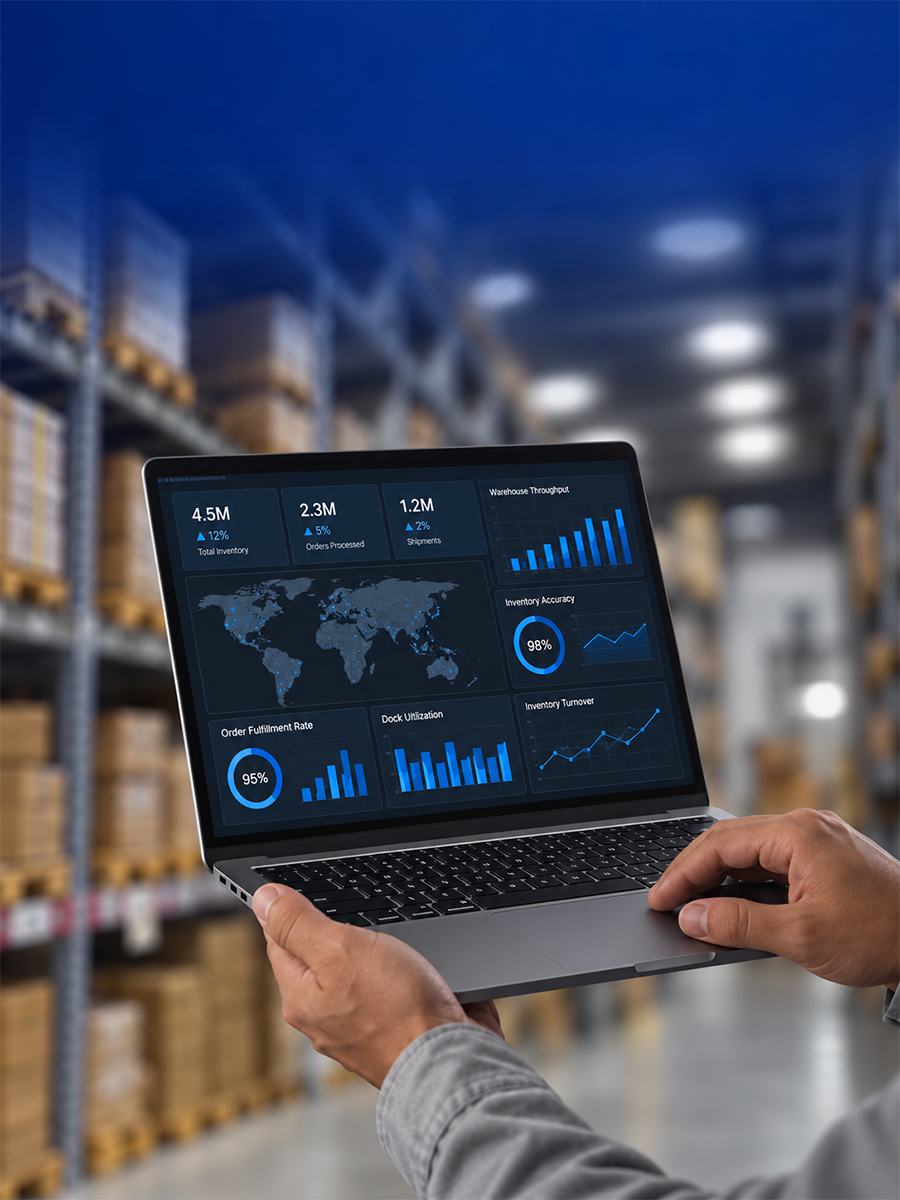
AR-assisted picking, where warehouse operators wear smart glasses or use handheld devices that overlay digital instructions onto their physical environment, reduces picking errors and increases throughput by guiding workers to the correct location, confirming the correct item, and validating the pick in real time. The operator does not need to consult a paper list, check a handheld scanner screen, or memorise a sequence. The information is in their field of vision, contextualised to exactly where they are standing and what they are looking at.
The same principle applies to loading optimisation, where AR can overlay container or pallet loading plans onto the physical space, and to maintenance, where technicians can see step-by-step repair instructions superimposed on the equipment they are servicing.
These are not transformative in the way the metaverse was originally marketed. They are incrementally powerful in the way that matters most to operations leaders: measurable improvements in speed, accuracy, and error reduction applied to the highest-volume activities in the operation.
Virtual Collaboration Across Global Teams
The pandemic normalised video conferencing. What immersive technology adds is presence.
For logistics companies operating across multiple geographies, time zones, and cultures, the ability to bring distributed teams into a shared virtual environment for planning sessions, operational reviews, and training exercises offers something that a flat video call cannot: the sense of being in the same room, working on the same problem, with the ability to interact with shared data, visualisations, and simulations in real time.
This application is still early. The hardware is improving but remains clunky. Adoption is uneven. And for most day-to-day logistics communication, a Teams call works fine.
But for specific high-value interactions, a cross-continental implementation planning session, a multi-stakeholder supply chain design review, a client presentation where the ability to walk through a virtual representation of their proposed operation would land differently than a slide deck, the technology is reaching a point where the experience justifies the investment.
The logistics companies experimenting with this are not doing it because the metaverse told them to. They are doing it because managing global operations with flat screens and shared documents has limitations that become more visible as the complexity of the work increases.
Where This Is Headed
The metaverse as a unified virtual world that the logistics industry logs into every morning is not coming. That vision was always more marketing than reality.
What is coming, and in many cases has already arrived, is the steady integration of immersive technologies into specific operational workflows where they deliver measurable improvement. Digital twins for planning and simulation. VR for training and development. AR for warehouse and field operations. Immersive collaboration for high-stakes global coordination.
None of these require a metaverse platform. None of them require an avatar. None of them require the industry to buy into a grand vision of virtual reality replacing physical operations. They simply require a willingness to evaluate where immersive technology solves a real problem better than the existing approach, and to invest where the evidence supports it.
The hype promised revolution. What the industry got was something more useful: a set of tools that work, applied to specific problems that matter, delivering returns that compound quietly without requiring anyone to believe in a virtual world.
For logistics leaders evaluating where these technologies fit, the question is not whether the metaverse is real. It is whether a digital twin could improve planning decisions. Whether VR could accelerate onboarding. Whether AR could reduce warehouse errors. Whether immersive collaboration could improve how global teams work together.
Those questions have practical answers. And the answers, increasingly, are yes.
.png)
.png)

.png)

.png)




.png)
.png)





.png)
.png)

.png)



.png)







.png)



.png)












.png)











.png)


.png)
.png)